THE ROAD TO TOWNSVILLE

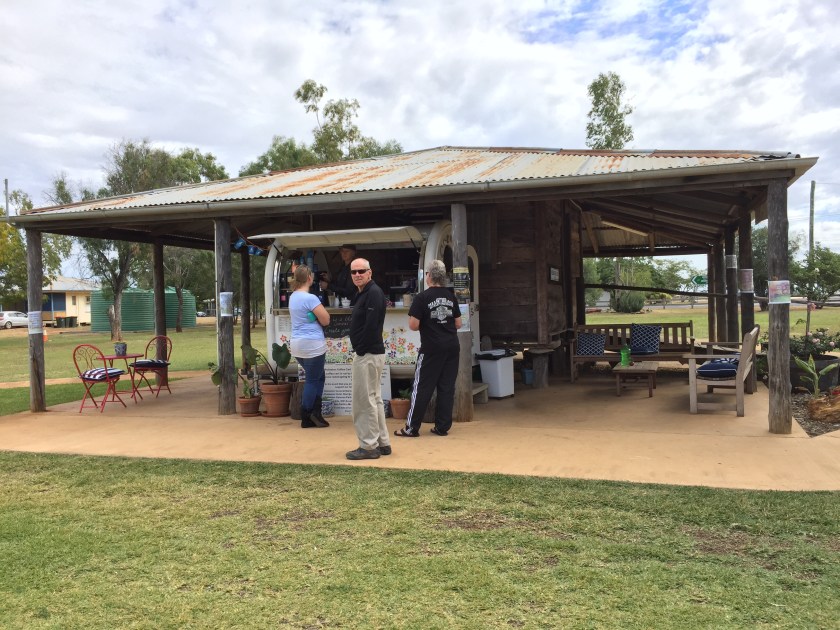
We left Carnarvon Gorge and headed for Emerald, a 3 hour drive. It was 50 mins out to the Carnarvon Highway and then 62km to Rollston, a very small town on the junction of the Carnarvon and Dawson Highways.We had stopped here for the toilets last year when heading south and had found a wonderful coffee van set up in the park. They had enhanced the area with cushions on seats, flowers on the tables and it was manned 7 days a week by volunteers. We stopped again and it was the same – a friendly local off a nearby property, home made carrot and chocolate cake and properly made coffee. She said the park used to be a dust bowl and they have been using the money they make to beautify it. She had a steady stream of customers. Well done.

It was then 70km to Springsure – a small town but perhaps a little bigger than you initially thought. It did have the impressive Minerva Hills National Park towering behind it. Another 66km to Emerald and our destination for the day. 6km before the town we saw grapevines – seemed out of place.

Emerald is a big mining town on the Nagoa River – lots of motels and a serious shopping strip – 2 shopping centres, one anchored by Woolworths and the other by Coles. Our accommodation was almost in the Coles carpark! Convenient if you needed milk, like we did. Our studio unit was big by our previous places and we managed to bring all our things in and spent time repacking and sorting what we will take to Orpheus, as we have a weight limit. Given the magnificent weather we had had so far, it was a complete reversal this afternoon. The rain started when we reached Emerald and continued on and off into the night. We went and had a Stone and Wood beer (thanks Greg for introducing us to it) at the Irish Pub in the main street. What a great place – it was huge but in a very cosy way – lots of booths, alcoves, a couple of bars and lots of Irish photos and memorabilia. We bought pizza and decided to take it back to our place, conveniently picking up a ready made salad in Coles.

The downside of the accommodation I learnt about at 3am, 4am, 4.30am, 5am when the workers all left. Entry to the block is a door code and the units had a door code, so the heavy doors closing made quite a sound. We had suspected that it might be workers accommodation by the facilities, and it was. Anyway…

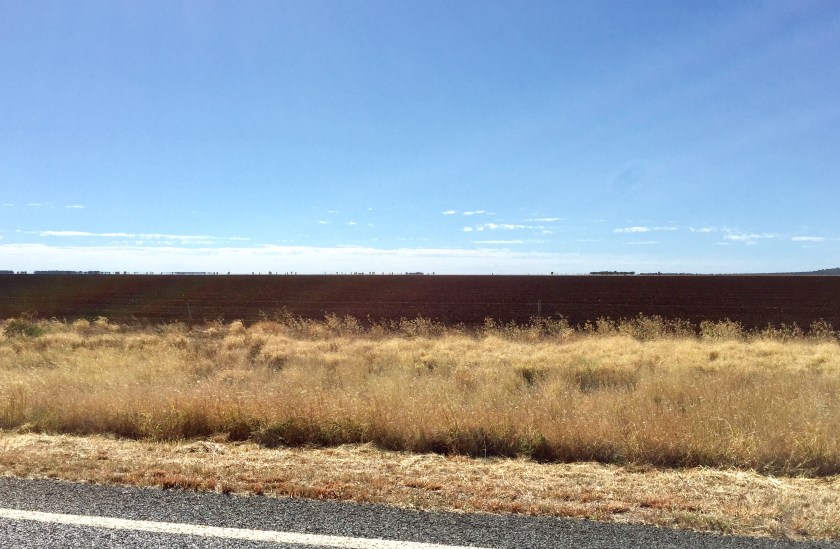
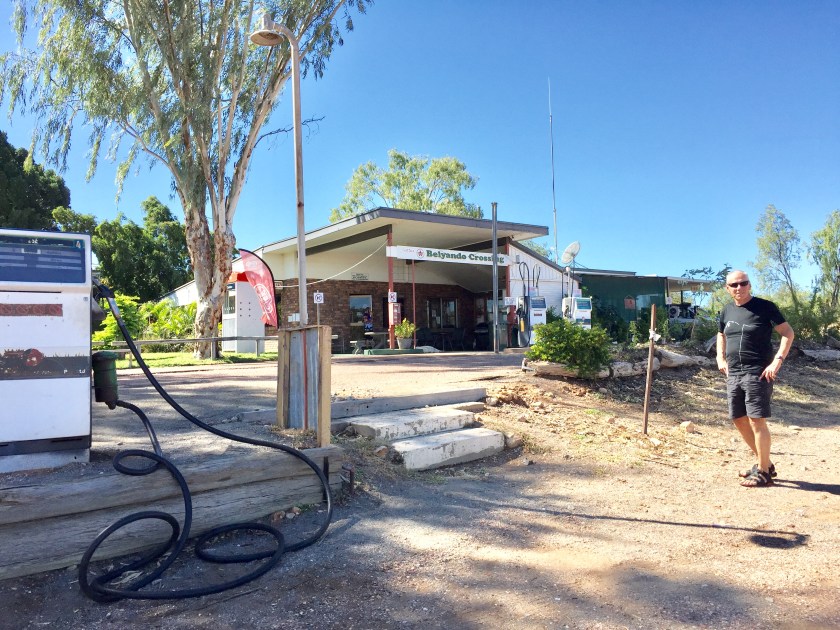
Next day and a lovely cloudless blue sky, and it is Emerald to Townsville via Charters Towers on the Gregory Development Road. We knew we were in for a big day when the “talking man” said to turn right after 350km and then shut up for a very long time. The road to Charters Towers is 475km and very flat, dark soil in a lot of places, ploughed and ready for a crop, but on a grand scale. We pass quite a lot of cattle trucks, they seem to travel in pairs and you get the smell, a minute or two after they have passed. The small town of Capella, 52km north of Emerald, is a surprise. It is a lovely little town with a well maintained and pleasantly landscaped swimming pool, cultural centre, the silos that most towns have and is on the turnoff for gem fossicking. It is then 220km to Belyando Crossing, a possible coffee stop. The land we pass is very very flat. Once again there are vast areas of black soil awaiting crops. We pass Mazeppa National Park, but this appears as mostly flat black soil. We reach Belyando Crossing – initially flying past, not knowing that this was it. An old building, a couple of petrol pumps, several cars pulling caravans and 2 police cars. Inside is very typical outback fare – a couple of pies, of indeterminate age, cold drinks, lolllies and a few ice creams. Paul orders a coffee, which was instant coffee in a 1 litre cup, a big cookie and then we feel able to ask for the code for the toilet.

The road to Charters Towers became more vegetated in parts but there were lots of floodplain signs and dips for floodwaters. The road for much of the time is raised a bit above the verge, presumably for when it floods. It does make it very difficult to pull off the road and there are not many made rest areas.

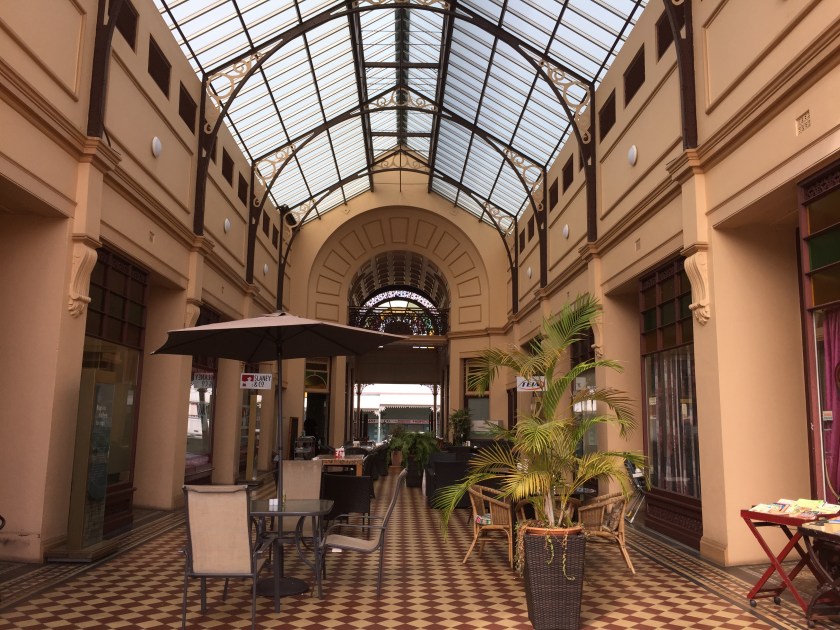
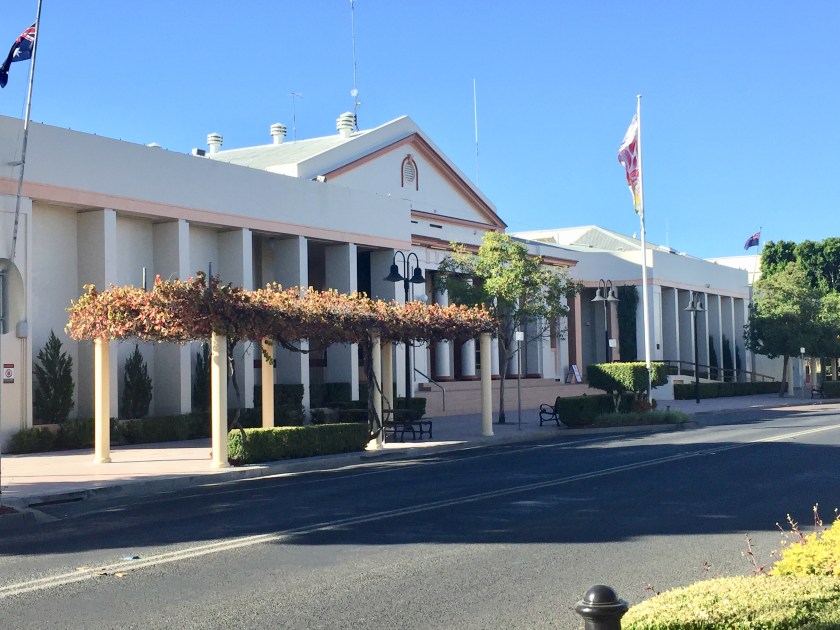
Charters Towers was a much bigger place. We had lunch in a park and headed for the centre of town. We parked and walked along the main street admiring the beautiful old buildings – very much from a time when this was a big gold mining town. We had coffee in the old Stock Exchange building – now with an atrium roof over a mosaic tiled floor. Very pleasant, but there were no people around. The centre of town was dead at 2.30pm? I can only surmise that a suburban shopping centre might take away the people?

It was only then 135km to Townsville, our destination.

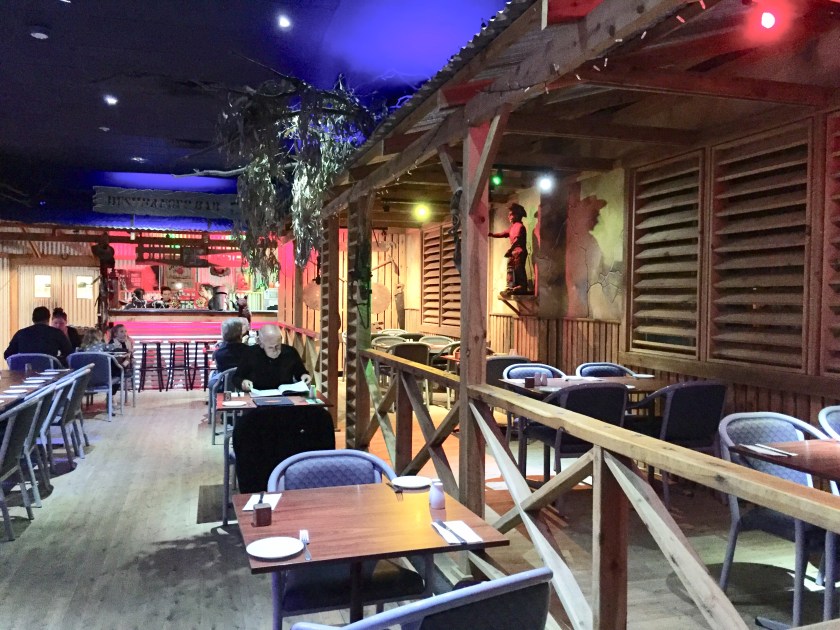
Townsville has grown! The suburbs started 8km out! The traffic was pretty heavy (although was Friday afternoon). We were told that the population is now 185,000 people. The “talking man” helped to get us most of the way to the Mercure and then we had to wing it a bit. It was good to have finally made it to Townsville and our accommodation. There was a wedding taking place so it was pretty busy.  Dinner was in the restaurant – open on one side to a covered deck. Very pleasant. During dinner a procession passed through, young girls, then lots of men, all pulling their luggage. Shortly after they made their way back to a separate room for dinner and massages. They were the Cowboys and their cheer squad, getting ready for Saturday’s game.

IMG_2863
Coffee van under shelter of a recreated timber hut, in the park at Rollston
IMG_2864
They made it very attractive and comfortable
IMG_2870
Flat landscape just north of Emerald
IMG_2871
The dark soil, ploughed and awaiting sowing
IMG_2873
All there was at Belyando Crossing
IMG_2885
Coffee shop seating in the atrium of the old Stock Exchange building in Charters Towers

Lovely old buildings in Charters Towers


CARNARVON GORGEOUS


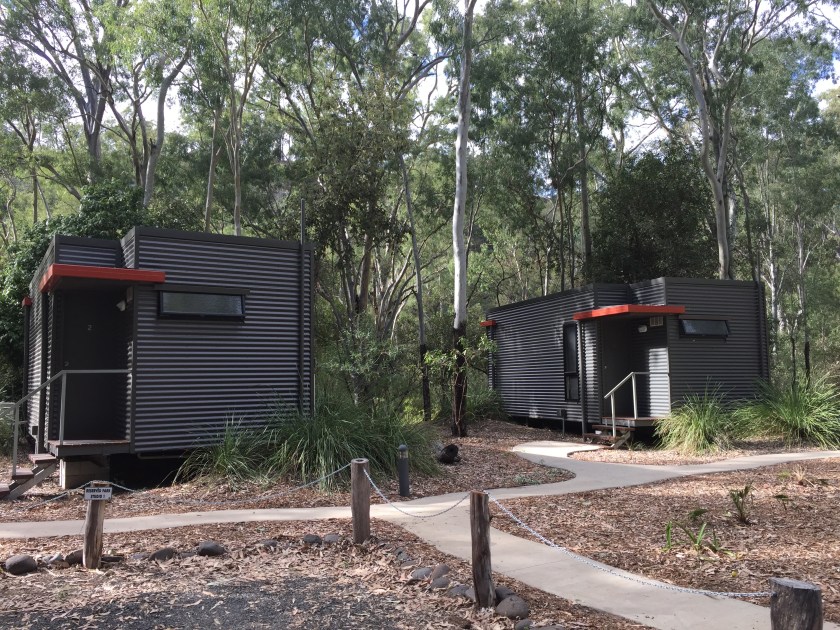
We left Injune and travelled north 100km and then turned left for the 45km to Carnarvon Gorge. The “talking man” had said that it was a 2 1/2hr trip – obviously because the road in to the Gorge would be slow. It was a lovely trip north – the road was undulating and there was a lot of bush/trees. As we drew closer to the turn off we could see ranges in the distance. After the turnoff the road was good bitumen and there were fields where wheat had been harvested and cattle were grazing, often loose on our side of the boundary fences. The sandstone cliffs got closer but the road remained fine, so we took 1 1/2hrs to reach our destination – Takarakka Bush Resort. It is 4km before the park entrance and Visitor Centre. There is another “resort” – they use the term, but it’s another place with some ok cabins, shop and café. We didn’t choose to stay there as you had to eat all your meals at their café. They prohibited any meal preparation in cabins. We stopped there yesterday to see if Paul could get a cup of coffee and he could only get a drip filter brew. He said he was glad he wasn’t eating all his meals there. Takarakka is very big but in a beautiful setting. There are camp sites set around 3 areas, all with grass and tall trees. We have one of 6 little cabins – quite new, with a lovely deck with chairs and table looking out to bush – very private. The sound of the birds is continuous and varied. It is not big and we have to store a lot of our things out in the car. Here you have to make your own meals. The 6 studios have their own outside camp kitchen – a microwave, bbq, gas hotplates, stainless steel work bench and sinks. There are utensils, pans, saucepans. You do wonder where they expect you to keep all your food – apart from in the bar fridge. The couple in the cabin next to us are here for 6 days and so have crates on their verandah. Paul and I laugh that we are getting very good at managing quite well in small spaces – our motel room at Injune was very small (Paul’s bag had to o/n in the boot).
We arrived Monday and as it was early, we decided to check out a couple of the shorter walks outside the park. We walked to Mickey Creek (3km) – a pretty walk along a mostly dry creek with some lovely vegetation. Then we walked to Baloon Cave (correct spelling) (1km) – to see some aboriginal rock art. You could see it, mostly hand stencils – it was ok. Monday night was our first experience of here – 4pm was Happy Hour on the deck – cheap drinks and free cheese and biscuits. We had wandered up a little earlier to try and access wifi (only available on the deck) with mixed success. Lots of people turned up and it was a very social place. At 5pm one of the staff gave a 40min talk on the Gorge and the various walks you could do, their degree of difficulty etc. He was very good. It was then time to organise our dinner in the camp kitchen. We had brought a beef in red wine casserole from home, frozen and so only needed to heat it. Paul cooked his great mashed potato and we cooked carrots and peas to go with it, and a bottle of red – easy beginning. Another couple came to cook, followed by a 3rd and of course we all got talking and had dinner together – lovely people and a great night was had by all. They were all from Qld – John and Deb from Maleny and Paul and Anise from Beaudesert.
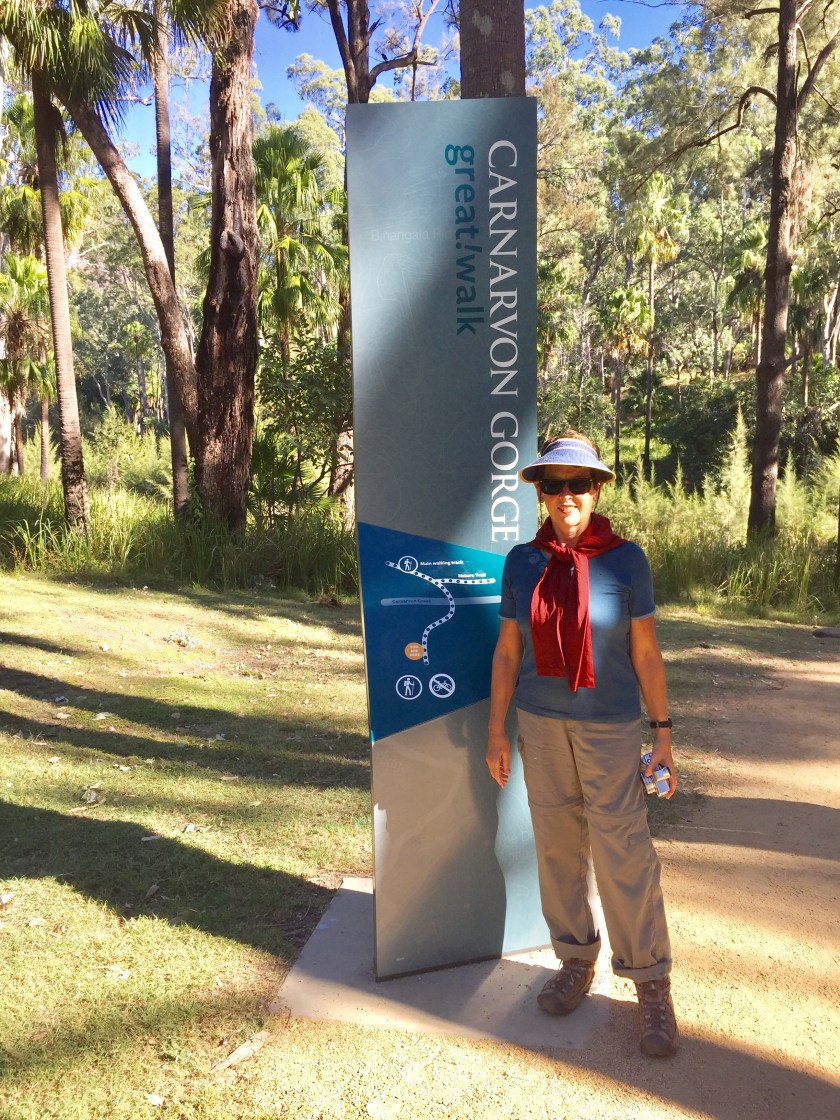
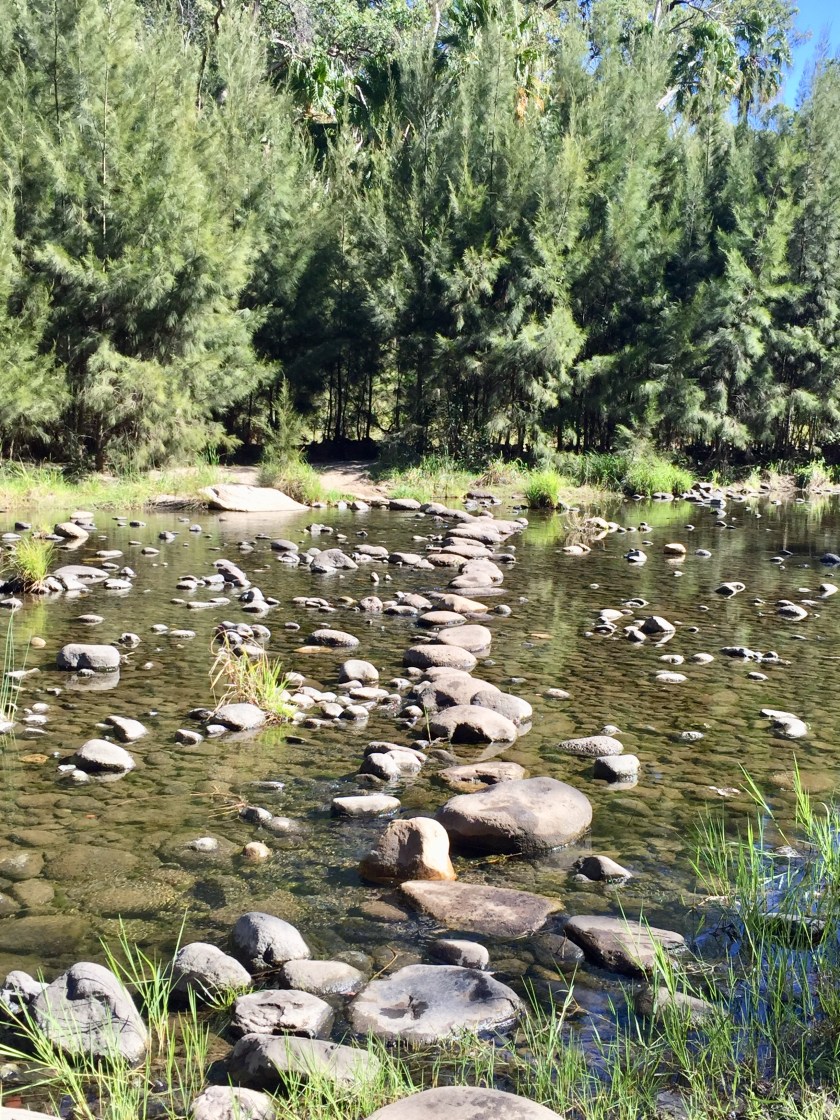
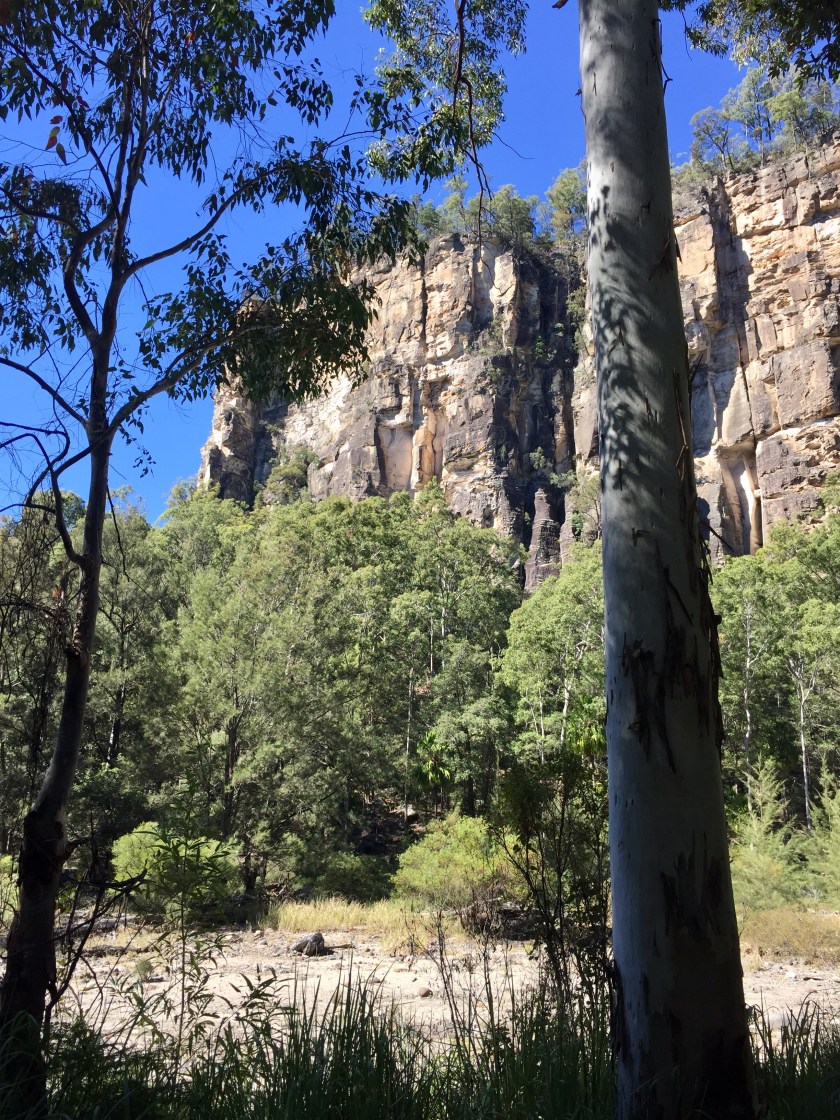
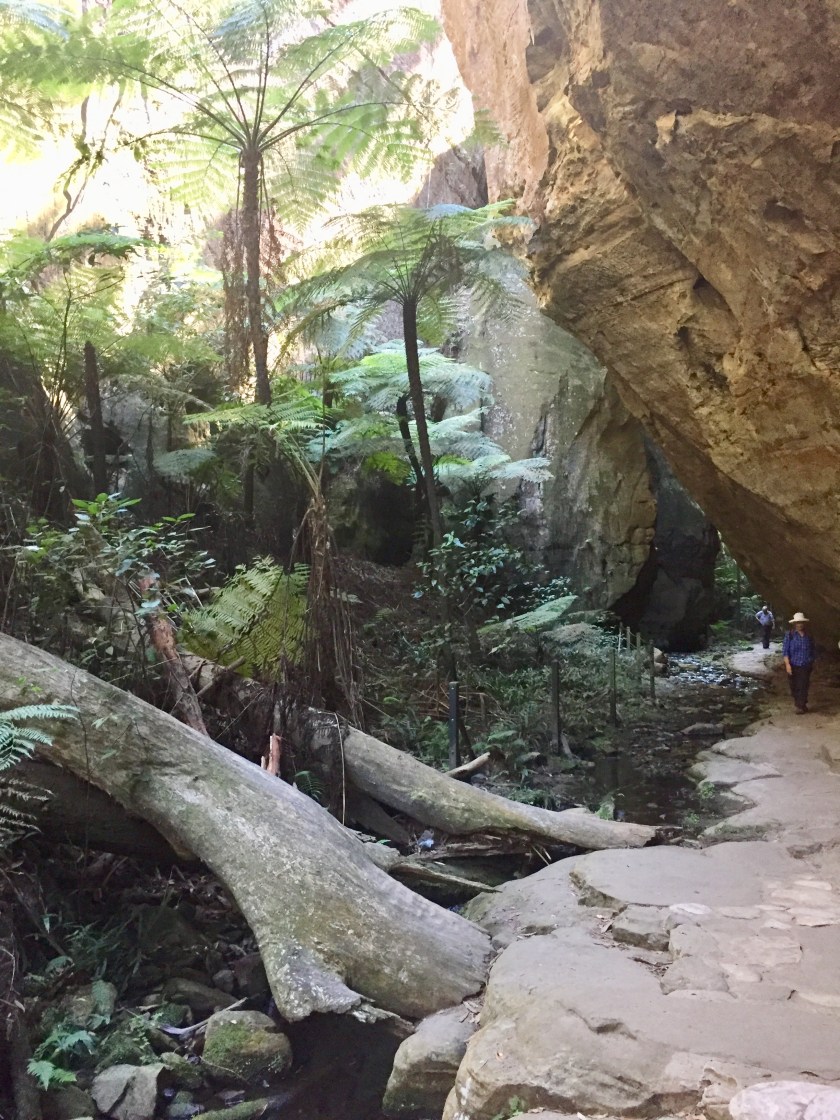
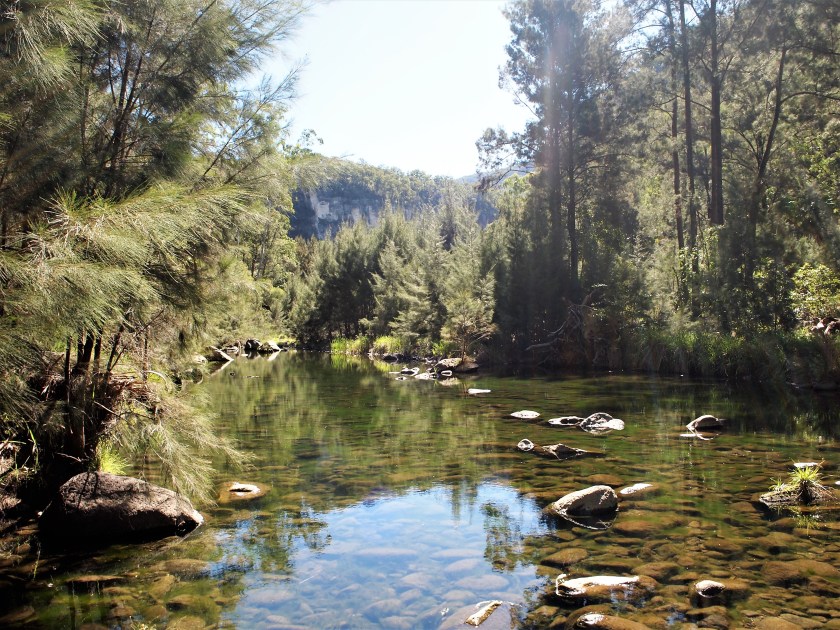
Tuesday was our big day (or at least my big day). We drove the 4km to the Visitor Centre and then set off – our objective being to walk out as far as was comfortable and then turn back, exploring the side gorges as I felt capable of doing. I had been told it was a flat walk, very few steps – yes and no. Depends how tired you are. Returning, there seemed quite a lot of steps. We had also been told that there were 16 creek crossings in total – more of that later. I had said that I would like to get as far as the Art Gallery – 10.8km return, so that was our plan. It was a lovely walk, at first the gorge was very wide, we could hear water trickling over rocks but often it was obscured by vegetation or we would be quite high above it. The first creek crossing was a wide one but the stones were big and flat – and I did what I know you should do – I tried to stride across at a pace. I had decided to give Paul my phone, rather than leave it in my pocket (in case I fell and landed on my pocket, in the water – wet phone and smashed phone). I felt good with my rock hopping. We crossed a bit later and again my technique was great. The third one, the stones were a bit slippery and I heard a noise to my left whilst halfway across which distracted me (kangaroos by the creek) and I lost my balance and ended up with not one but both feet in the water! Paul was there laughing. I too had to laugh. Oh well, I found out my boots were waterproof. Crossing number 4 I was a bit more hesitant and of course went in again! 5 and 6 I regained my composure and dignity and succeeded. We later heard of a man who dropped his very expensive camera in the water on one crossing.
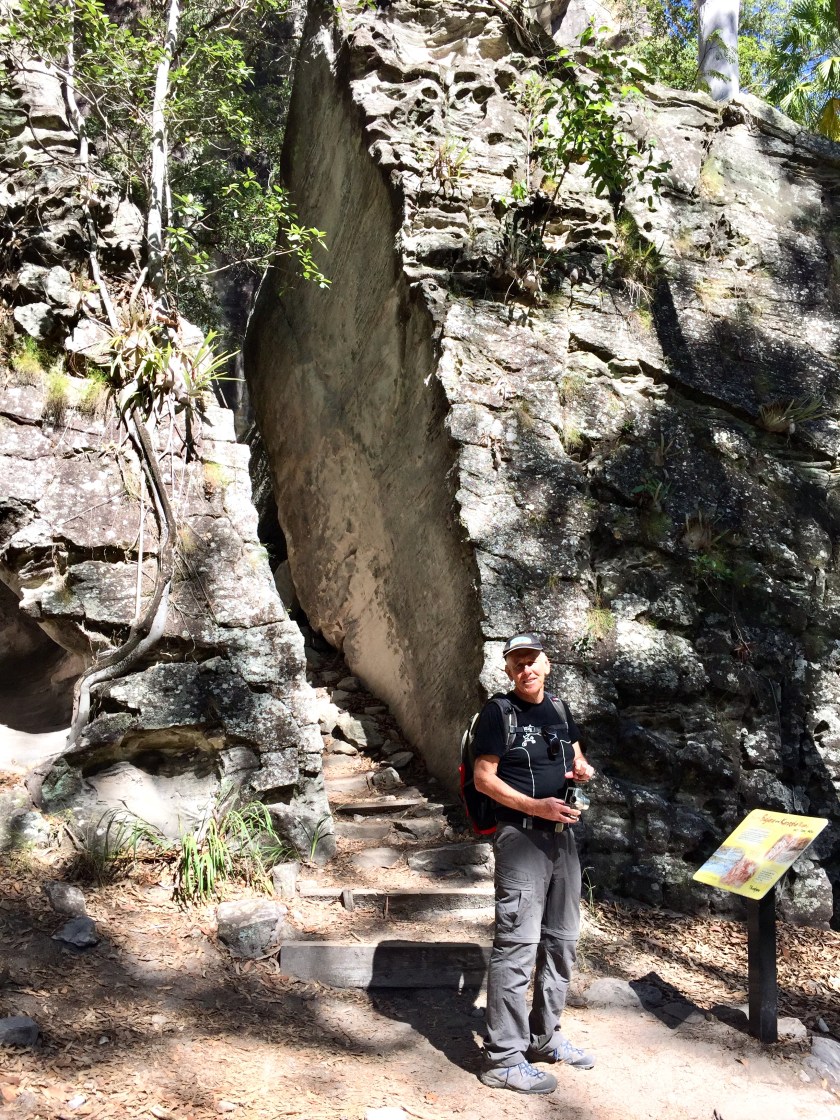
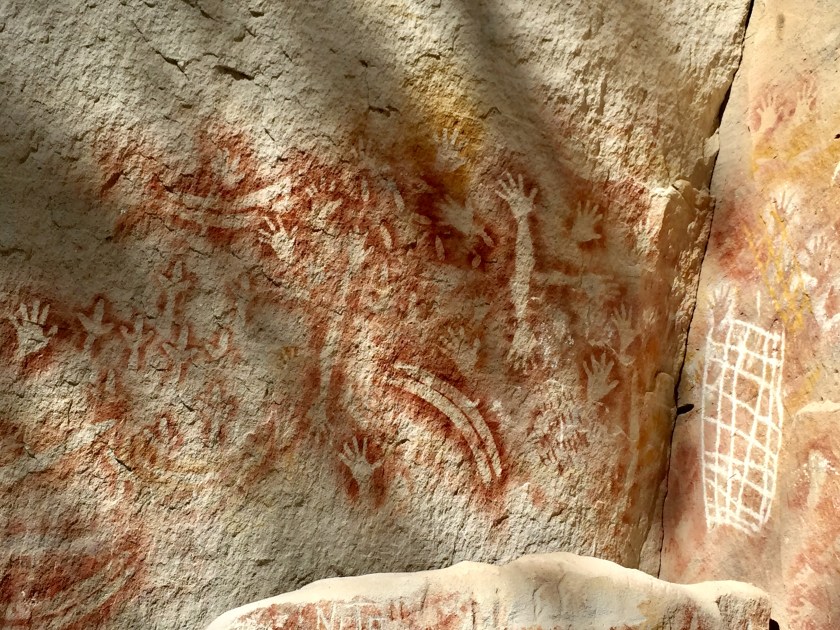
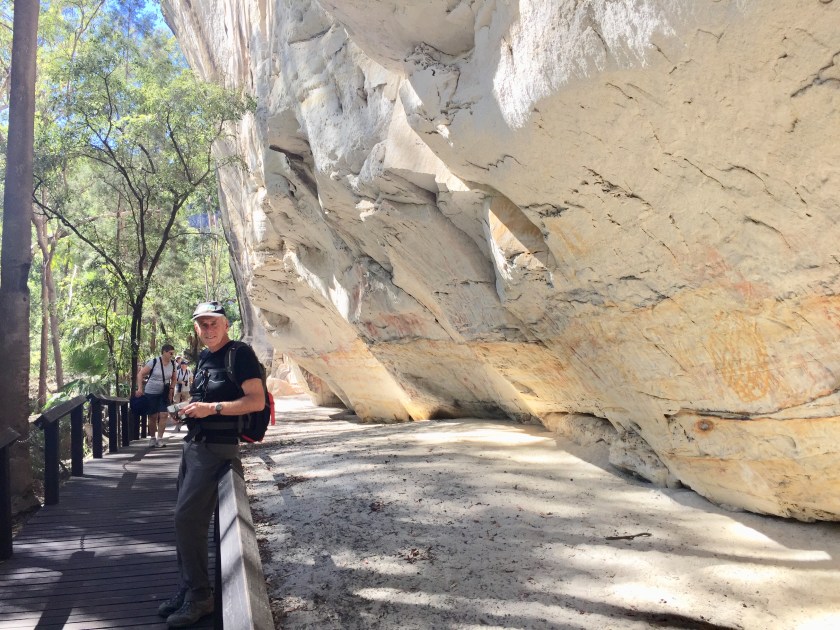
We had made it to the Art Gallery. It was a 300m climb up the side of the Gorge to a 62m wall of sandstone with Aboriginal engravings, ochre stencils and freehand drawings. It was impressive. We met one of the park rangers whilst climbing up to the Gallery. She was doing some “gardening” – clearing overhanging bushes. She said it was a great job working here, although much of their real maintenance work is done in the summer months, when few tourists come as the temperature is around 44 degrees! She said Ward’s Canyon was her favourite, and the fellow at the briefing the night before had said the same thing.
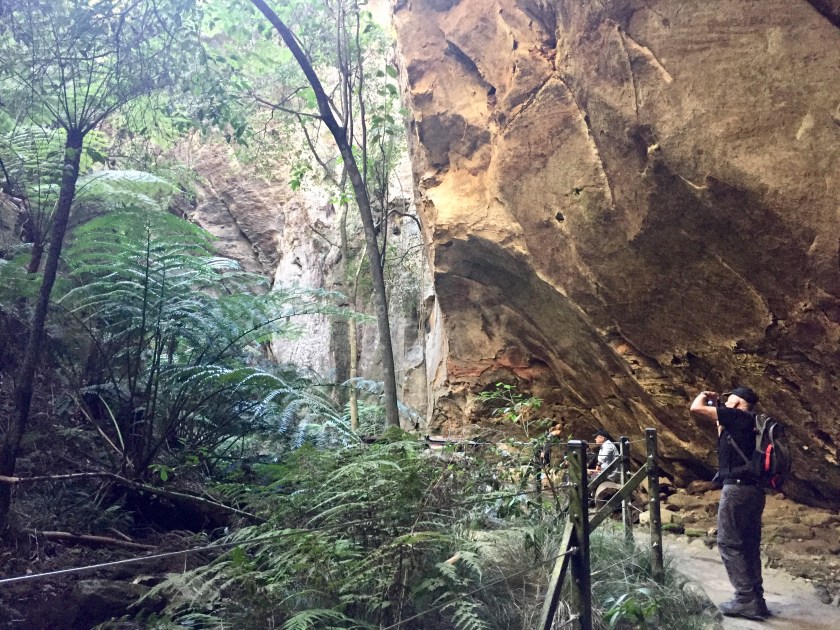
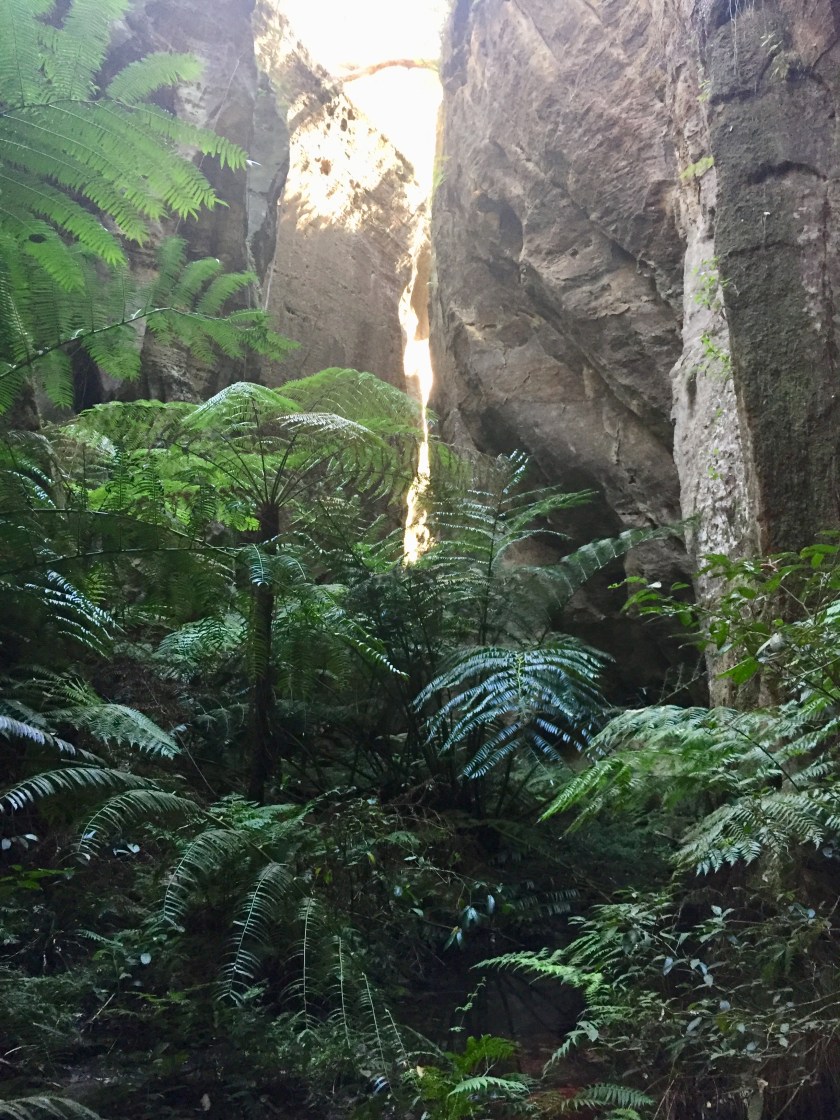
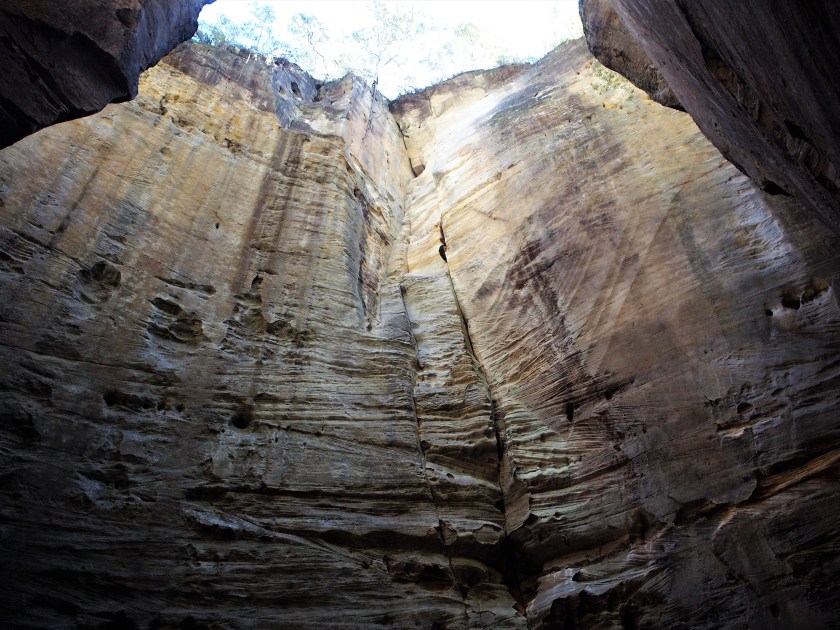
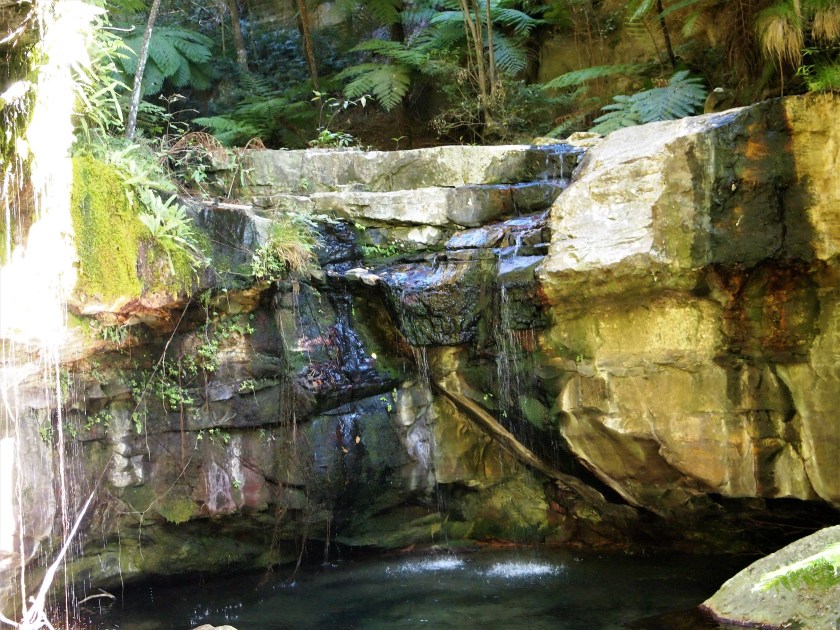
Back to the main track and I said that I would like to try Ward’s Canyon. It was a 240m climb up to a waterfall, then the track went further up into a magnificent fern filled, very narrow canyon. The sides were high, only a small amount of light at the top as they came so close together, and the “King Fern” dominated a lot of the ground here. It is the same fern growing at Central Station on Fraser Island – prehistoric and metres in diameter. We stopped here and had our lunch just enjoying the cool and beauty. We had been told of a rock pool near the top of the waterfall which the aboriginal women used as their birthing pool. Interesting – it had the right shape and the water was flowing through it.
Down on the main track and I decided that I would not go to the other 2 side tracks. It was still a long walk back – more than 4km. The Moss Garden was a 1.3km return side track and I was happy to leave this out and head home. I had acquired a walking pole (stick) which I found useful on the creek crossings going back – I didn’t need it but it was a comfort in case I got the wobbles. A lot of people were carrying sticks. It was interesting – you passed people, people passed you, you saw the same people at different stops – it was very friendly. We walked back to the Visitor Centre – there were 7 or 8 who had finished and were sitting on big stones at the end of the track, obviously waiting for friends. As we walked through they all cheered – fun. People behind got a cheer. They were the cheer squad for the finishers, until their friends finished.
It was then a well earned rest till happy hour, although we had ours on our verandah. We had booked for the roast dinner that the place does Tues, Thurs and Sundays. Interesting – it’s bring your own plates, bowls, cutlery, glasses and they provide the dinner. Then you take your stuff away and wash it yourself. We met up with our other 2 couples on the deck at reception and once again it was a good night. There were 62 for dinner, they gave each table a number and then she used a bingo container to pull out a number and that table came up to be served. She had explained the system and told us what was on the menu. As she was telling us the menu was everyone was going “Yeah” out loud to each item mentioned – sounded like no one had eaten for a long time, but it was fun. There was roast pork, lamb on the spit, baked vegetables, cauliflower au gratin, gravies, sauces, bread rolls and apple crumble and custard. It was outside, but the overhead sails and a couple of heaters and my long johns kept me comfortably warm. We did our dishes at our camp kitchen with one of the couples – the other took theirs to their cabin to do in the morning. They did have an excuse, they had gotten up at 4am to climb Boolimba Bluff and see sunrise. It is 900+ steps up and 900+ steps down. They got there an hour too early and had a cold wait for sunrise. We passed them later at the Art Gallery, so they had then done the walk that we did.
We awoke to another beautiful day and I have no aches or issues from yesterday’s walk – fantastic. Today Paul has gone off on his own, with his lunch and a little gas stove to make a cup of tea. That will make everyone envious. People were impressed with our lunch of Ryvitas, cheese and ham yesterday – most seem to just eat muesli bars or some similar snack. He has gone to do Boolimba Bluff (not for sunrise), and then will go to the Amphitheatre and Moss Garden. I am only too happy to remain back at our cabin and potter. That is possibly why this post is so long – I have the time. It is also helpful to us when we make our photo book and journal, to have the details. You forget things so quickly, especially if there are lots of interesting things you see and do.
No sooner had he gone off in the car than I realised our pegs were in the crate in the boot, and I was going off to hang out the washing we did yesterday! Oh well, the little shop at reception sold pegs. I thought that whilst I was up there I would try and hook into the wifi and get the mail and SMH on my Ipad. Well, it told me I was locked out and would need to reactivate the whole thing! The wifi is dodgy anyway. I can’t get it working but I do have the washing on the line.
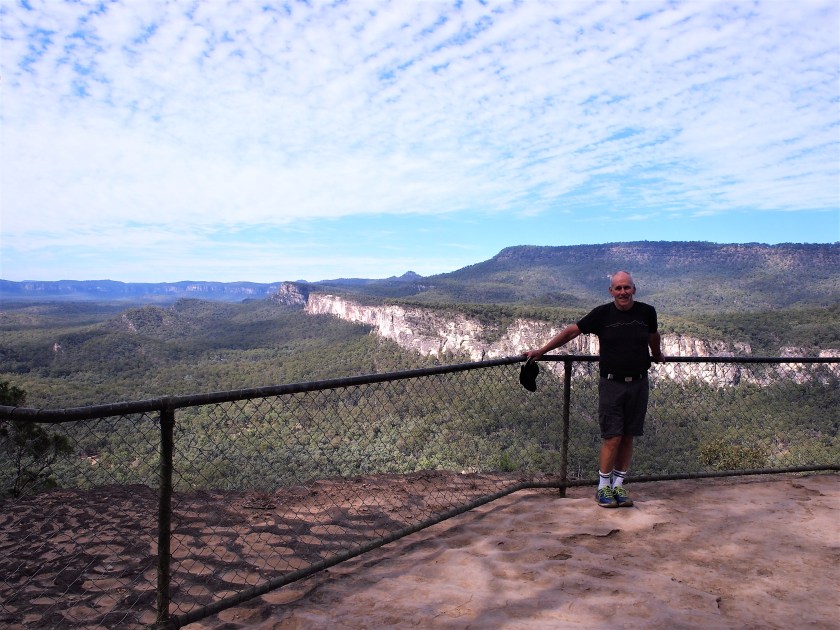
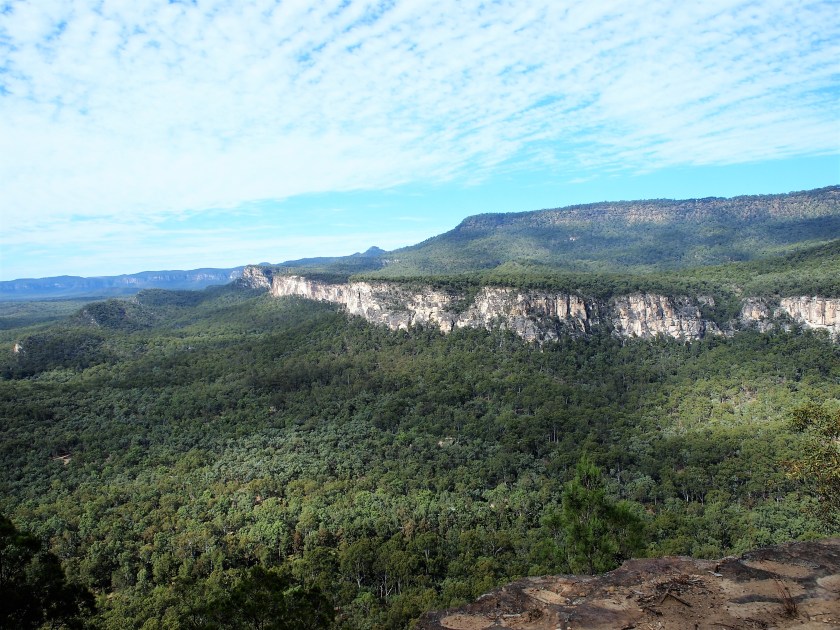
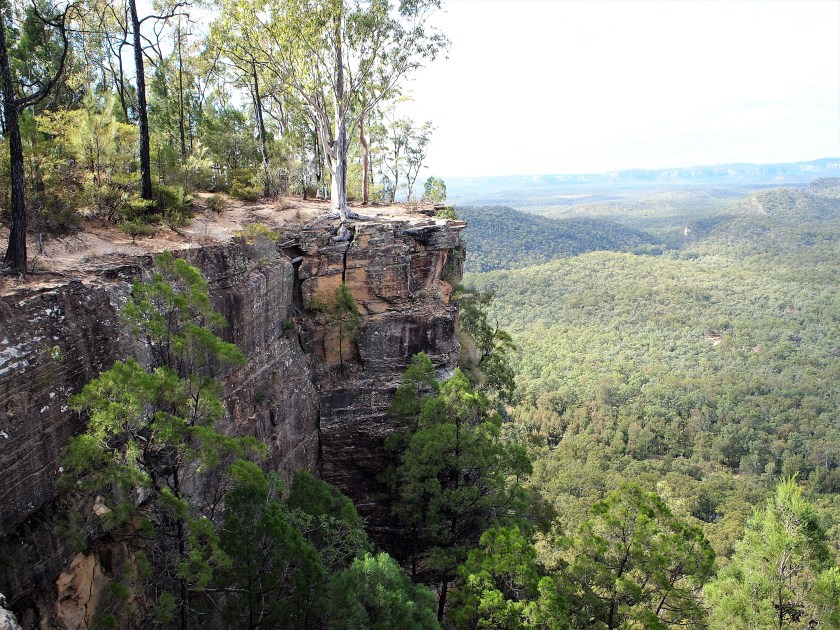
Paul did walk to Boolimba Bluff and spent about 30 minutes at the top boiling the billy, admiring the expansive views of the gorge and well beyond, and chatting to a couple of couples. From the main track the climb was about 40 minutes and not too hard. After returning to the main track he headed to the Amphitheatre and enjoyed the quiet and spendour until the school group arrived! While there, someone said “that’s Paul **” Amazingly they were acquaintances from our suburb , Mick and Sue, who we have known for about 30 years.
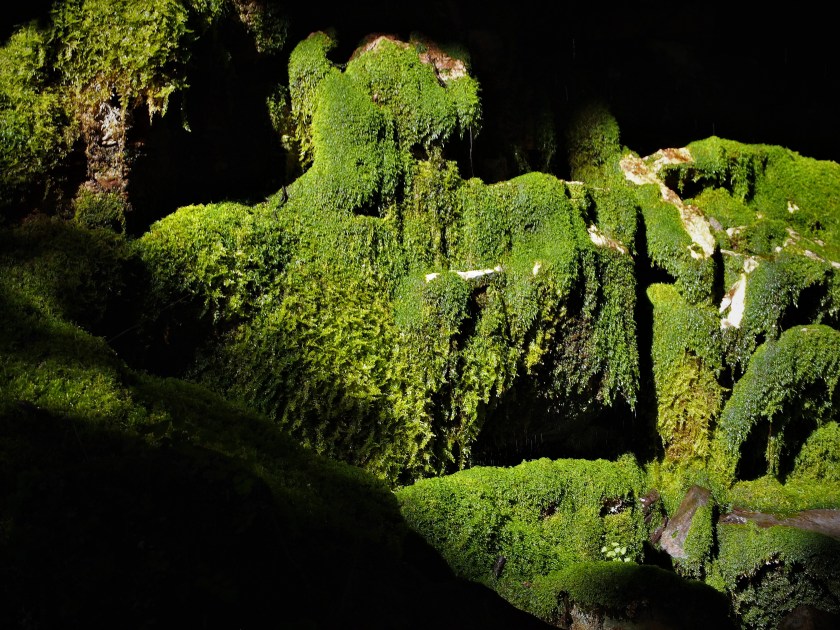
Then it was on to the Moss Garden – carpeted by moss with water dripping from everywhere. I decided to have my lunch there. It was a beautiful, quiet and contemplative place and a few of us sat there in silence for many minutes – until the school group arrived!
Then it was back to the camp at about 2:30pm. Happy Hour and then off the check for platypus in the creek – they say they are around at dawn and dusk. People watching but no sightings.

Dinner back at camp kitchen and an interesting collection cooking – the Victorian vegetarians and the South African new Australians with their 3 children.  He had been shot, bashed, had rocks thrown at him in South Africa and they had made the decision to emigrate.  The wife was so happy to be living on the Atherton Tablelands.  They took their meal back to their accommodation and we had our dinner with our friends from the cabin next door.  Once again a lovely night and a good one pot chicken, bacon, spinach and pasta followed by tiramisu – not bad for the outback.

IMG_2798

IMG_2802
The first stepping stones – so easy!
IMG_2804
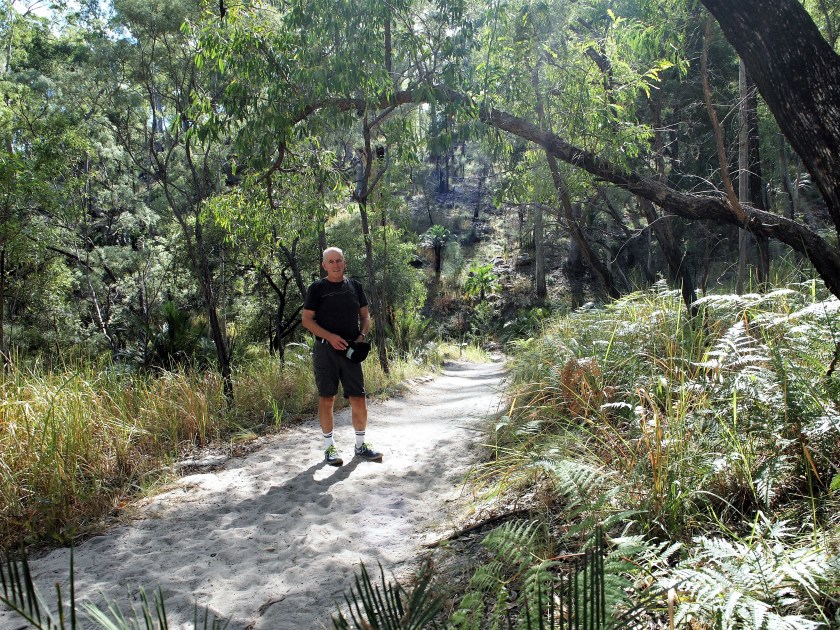
Walk along the gorge to the Art Gallery
IMG_2807
Walk through to the Art Gallery
IMG_2811
Art Gallery
IMG_2819
Art Gallery
IMG_2824
Ward’s Canyon
IMG_2829
Ward’s Canyon
IMG_2831
Ward’s Canyon with King Fern on middle left
IMG_2833
Ward’s Canyon and narrow bit of sunlight
IMG_2843
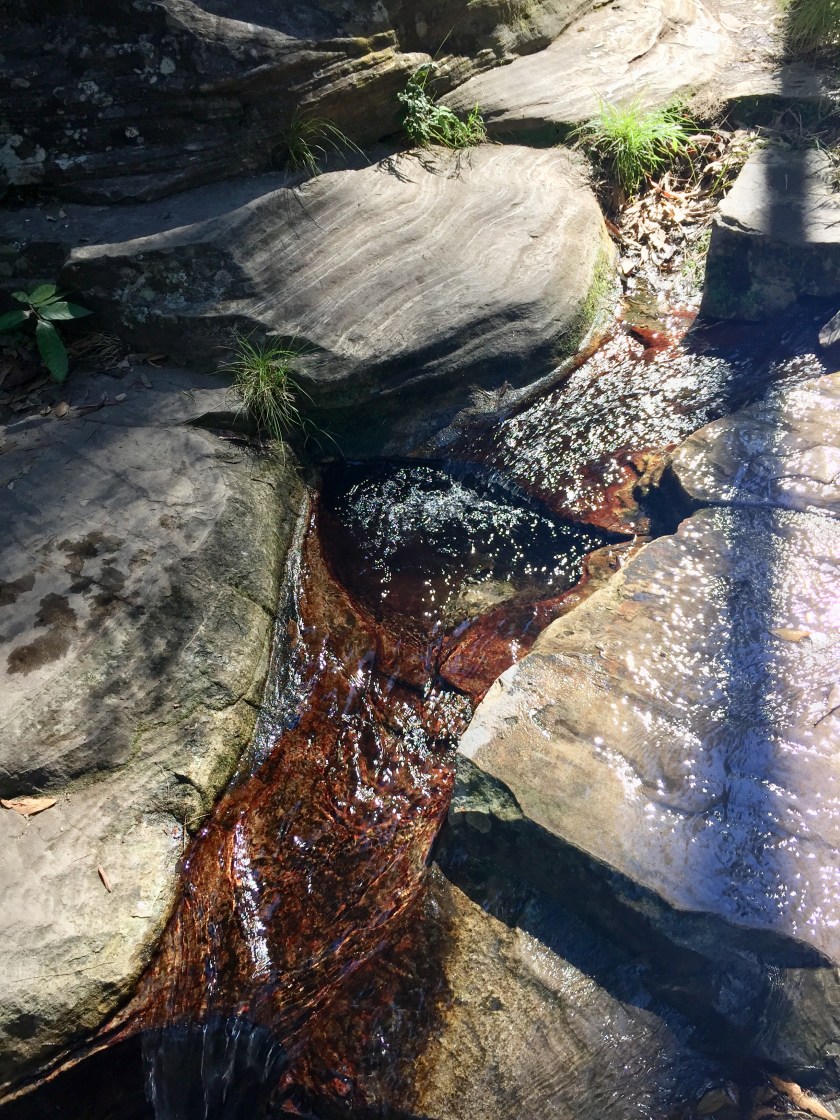
Birthing pool in ward’s Canyon with the red ochre so present in the rocks.
IMG_2844
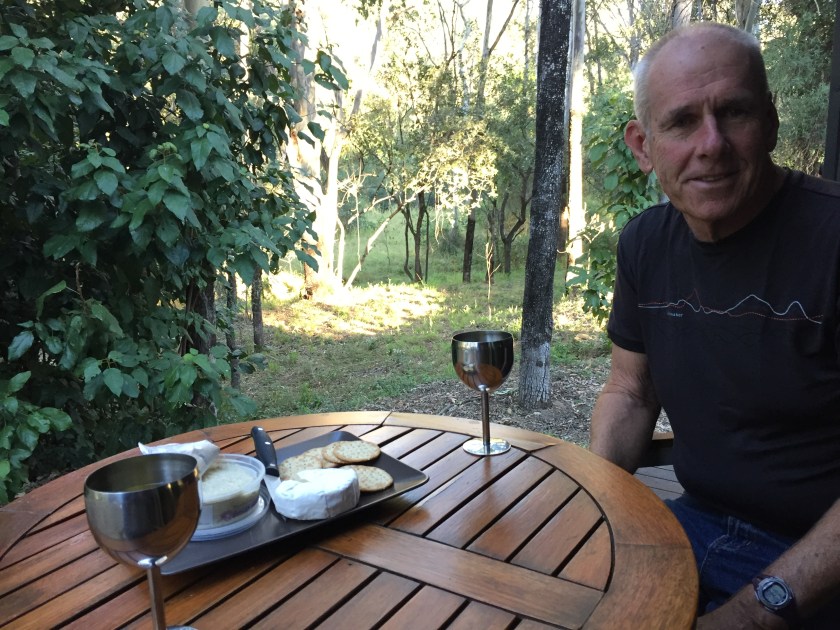
Cheese and bickies on our verandah before our roast dinner on ‘Tues night
IMG_2849
Main reception area and deck where Happy Hour was held and the roast dinner. Bar in the little hut at front.
IMG_2852
My contribution to the village, particularly as I am the Mayor! Private joke.
IMG_2851
My whole village that I control at Takarakka
IMG_2859
Our little cabin at Takarakka
OLYMPUS DIGITAL CAMERA
View from the bluff
OLYMPUS DIGITAL CAMERA
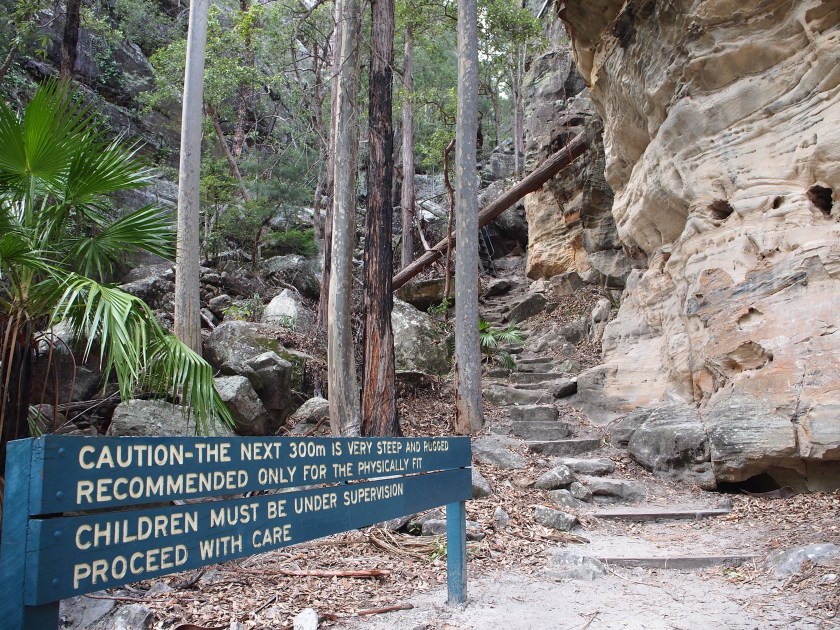
Climb to Bluff – 920 steps
OLYMPUS DIGITAL CAMERA
Bluff view south
OLYMPUS DIGITAL CAMERA
Bluff view east
OLYMPUS DIGITAL CAMERA
Back at the main track
OLYMPUS DIGITAL CAMERA
The Gorge
OLYMPUS DIGITAL CAMERA
Approach to the Amphitheatre
OLYMPUS DIGITAL CAMERA
Inside the Amphitheatre
OLYMPUS DIGITAL CAMERA
The Amphitheatre
OLYMPUS DIGITAL CAMERA
Pool at the Moss Garden
OLYMPUS DIGITAL CAMERA
The Moss Garden


MAYBE INJUNE IN MAY

Today was an interesting day, a drive from Narrabri to Injune – some 7 1/2 hours.  We left before 8am with the temperature around 7 degrees, but not a cloud in a beautiful blue sky.  This gave the most beautiful views of the mist covered Dividing Ranges in the distance on our left, contrasting with the vast flatness on our right.  We were headed for Moree, 100km north and passed through the little towns of Edgeroi (only a silo) and Bellata, with at least a truck stop, a few houses and a police car waiting for speedsters.  The countryside as I said was so flat, with stubble from harvested wheat and cotton, black soil in places and a railway line following the mostly dead straight road.  Next town was Gurley, supporting a silo, pub and 2 houses.

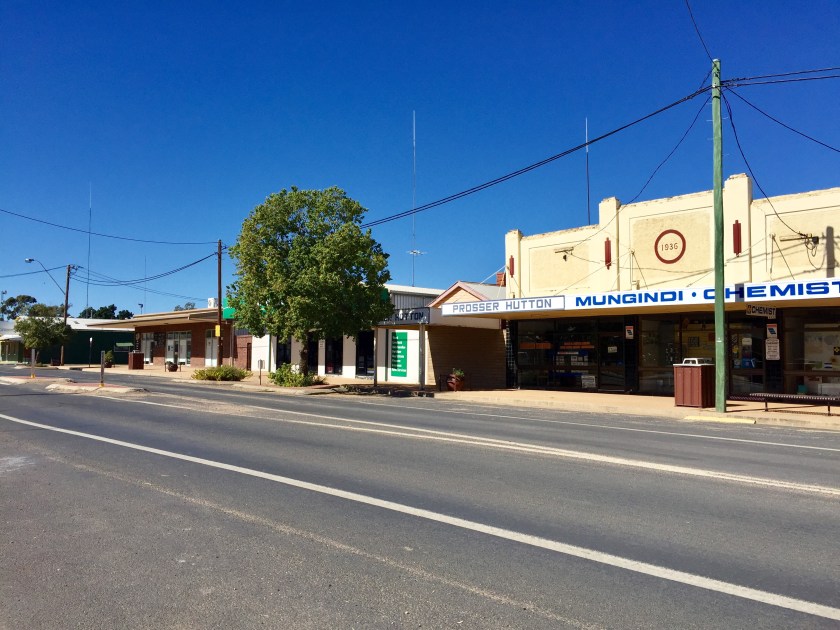
Moree is on the Mehi River and is a big, prosperous town with lots of silos, a country airport, lots of motels all boasting they have artesian spas and a lovely main street with well preserved old buildings and landscaping.  We stopped for a coffee in a popular café (but it was Mothers’ Day).  A first was using a modern automated toilet out on the footpath that washed the floor when you left, played What the world needs now! and flushed when you washed your hands.

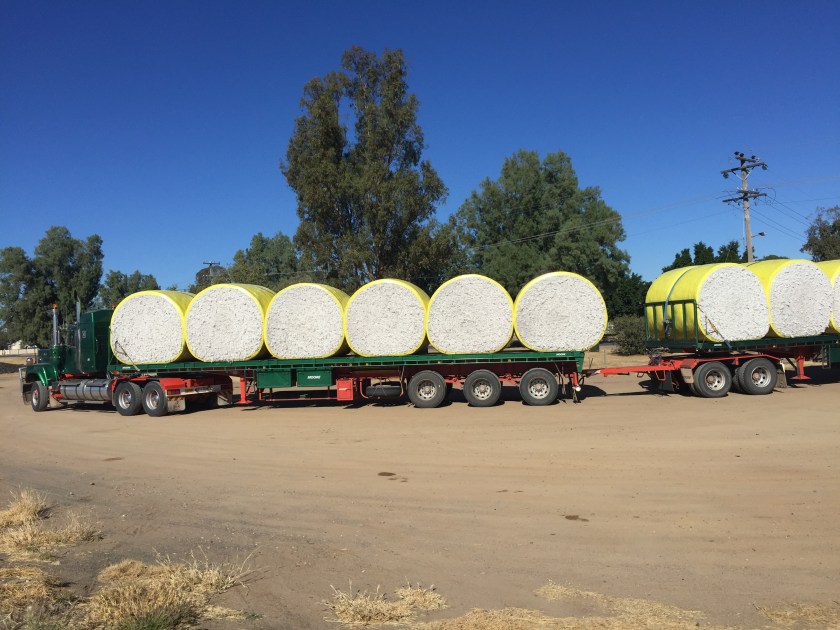
Leaving Moree we headed towards Mungindi – 120kms on the Carnarvon Highway.  Yesterday driving towards Narrabri and since, there has been so much cotton beside the road.  It has blown from the bales of cotton being transported on big trailers.  The landscape really was of cotton fields, with cotton growing and bailed up in the fields along this section of road. Traffic was almost non-existant.

[Paul] Paul was so excited to cross the Gwydir River about 5km out of Moree. He reminisced about the anonymous poem -“Spider from the Gwydir” – a favourite of his that goes –

“By the sluggish river Gwydir lived a hungry red-backed spider,
Who was just about as wicked as could be;
An’ the place that he was camped in was an empty Jones’s jam tin
In a paddock near the showgrounds, at Moree.
Near him lay a shearer snoozin’, he had been on beer an’ boozin’
All through the night and all the previous day;
An’ the rookin’ of the rookers an’ the noise of showground spruikers
Failed to wake him from the trance in which he lay.”

To find the rest of the poem and the tale it tells go to – https://www.bushverse.com/the-spider-by-the-gwydir

[Back to Leonie] In Mungindi we crossed the Barwon River and entered Queensland.  Unlike other places where you cross the border and they list the items you cannot take into that State, here the only thing was “No Rabbits – $30,000 fine”.  It was then on to St George – 118km away – the landscape flat, flat and more flat, with cotton still growing and blown off puffs of it lining either side of the road.

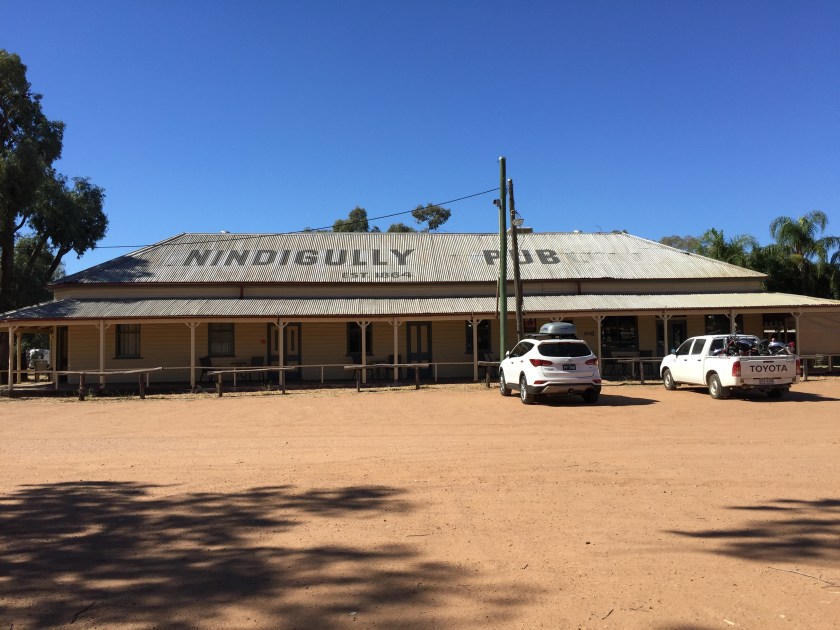
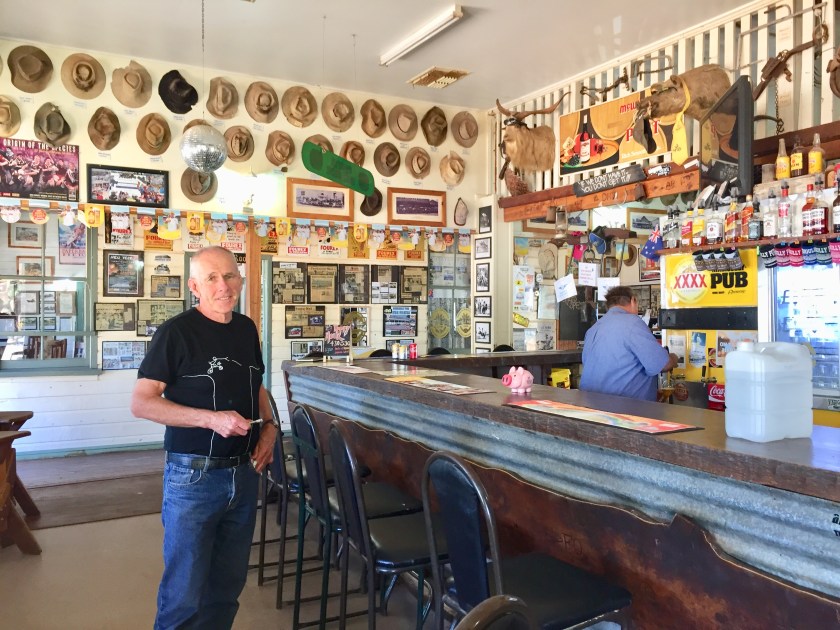
Paul had been told by a friend to watch for a sign that said “Free Beer, yesterday” and we almost missed it.  There was a rough sign but only a dusty track off the main road.  We did a U turn and went down the track a couple of hundred metres and behind some trees was the Nindigully Pub, 45km south of St George.  What a place – a true (replica!) outback pub – the one where there is memorabilia covering every piece of wall or ceiling.  This one had a big collection of hats nailed to the walls.  We ordered a beer and then felt free to wander around the place.  They had really developed around it, keeping it all looking similar to the pub.  There were rustic “sheds” for eating in, open air covered area for music, and then free showers and toilets.  The showers were in a corrugated shed with wording on the doors saying – “Exposed Tools”, “Old Tools”, “Silly Tools”, “Tool box”, “Private Tools only” – so outback!

St George is not a big town but is on the river, which gives it a pleasant place for open space and picnics.  It does not look as prosperous as Roma, 200km further north and our next stop.  The drive to Roma was through flat, scrubby land, with the soil getting redder.  It was so dry.

Next was our destination for the night – Injune, 85km north on the Carnarvon Highway.  We had booked our motel room and luckily we did as it is fully booked out – and on a Sunday.  Paul has suggested that some of the cars are utes, and it may be full with workers.  Last night we had felt sorry for the motels in Narrabri.  There were only 3 of us in the one we stayed in (could take 14) and the motels close to it also only had a couple of cars in.

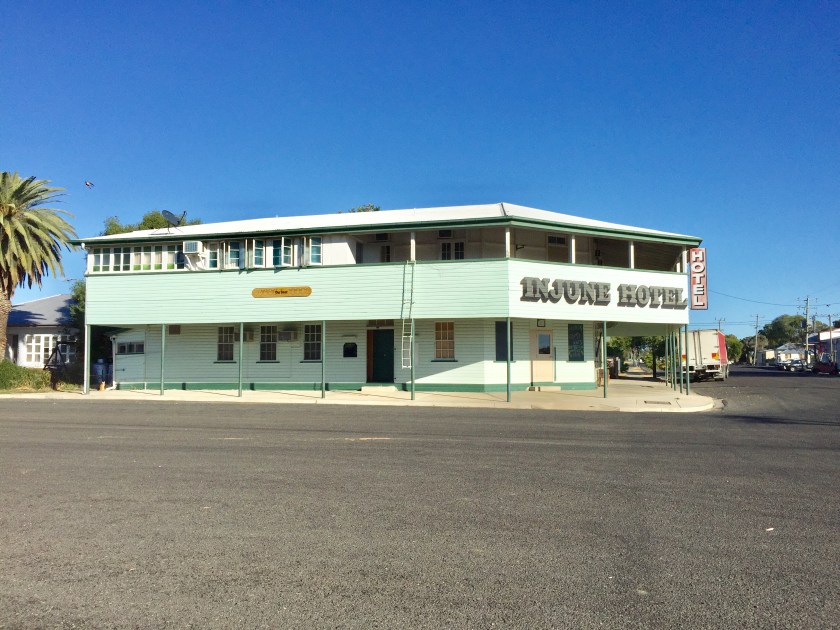
We arrived in Injune this May at about 4:30pm and turned up at the pub at 6:15 for our Mother’s Day meal. There were quite a few people there, including John the cowboy who we met last year with his young wife and with little John who was now about 18 months old and quite cute.

We ate our schnitzel and then engaged with a cyclist who was wanting to book into our motel earlier but could not get in because it was full. He had set out from the Gold Coast 3 weeks ago, heading for Ayers Rock. His name was Wayne and we had a very interesting chat about many things including life and people. Paul shared a love of Banjo Patterson with him – AND the Spider from the Gwydir. Both had gone to Walgett just to see the “river so brown, the Darling River at Walgett town”.

We got back to our motel about 9:30pm to retire and anticipate an exciting trip to Carnarvan Gorge the next day.

IMG_2695
Narrabri RSL – like an outback shed
IMG_2714
Moree – well cared for with the buildings and landscaping


IMG_2716
Main street in Moree
IMG_2723
Cotton road train
IMG_2721
Cotton growing beside the road
IMG_2728
Exciting Mungindi
IMG_2747
Nindigully Pub
IMG_2730
Bar at Nindigully pub
IMG_2763
Injune Hotel
IMG_2761
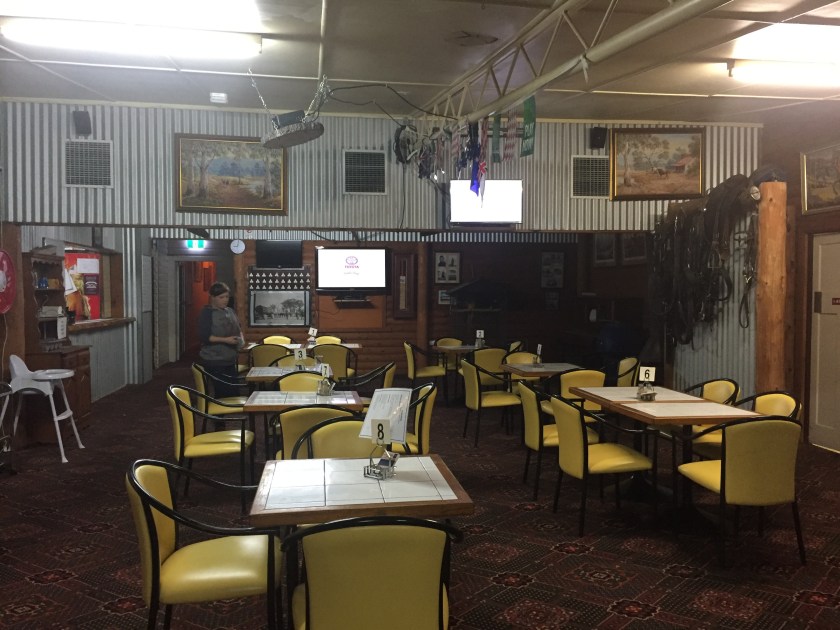
Inside the Injune hotel

THE LONG LUNCH

We were invited to lunch on the Central Coast and as it was a 2 hour drive, we decided to stay close by rather than drive home.  If we were going to stay one night, why not two?  Luckily winter made for good accommodation prices and we found a lovely studio apartment at The Entrance.  It was a very enjoyable and relaxed lunch with some very old friends and then a short drive to our accommodation.

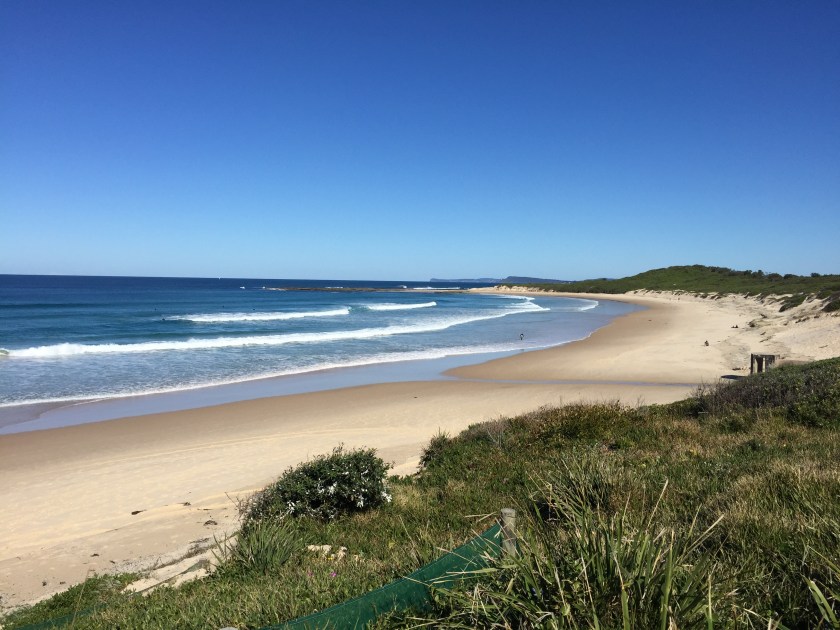
The next day we decided to play tourist in an area that we have not really explored before.  We set off looking at the coast north of The Entrance and fell in love very quickly with some beautiful coastline. We were blessed with wonderful weather – cloudless sky, no wind, still ocean, and for winter, warm temperatures.  The sea was so flat that we managed to spot whales at Norah Head Lighthouse.  For a Monday, there were lots of others doing the same thing.  It was amusing that no photographs were allowed here, except professional photographers.  We thought they would be the ones not allowed to take shots.

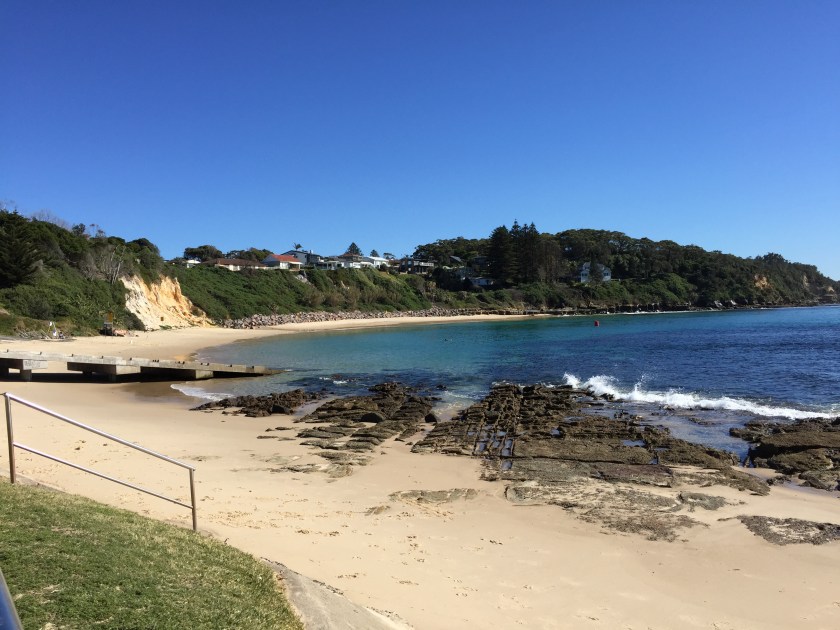
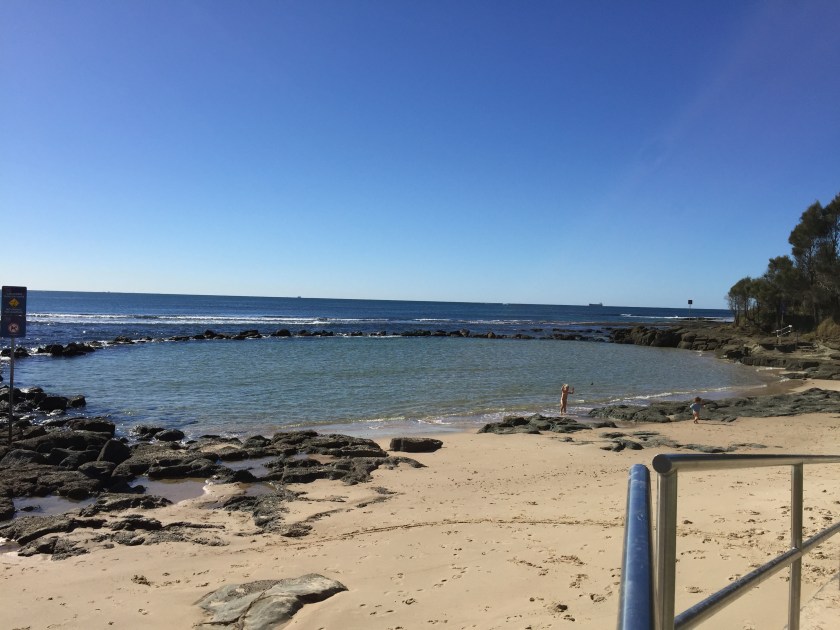
To the north of the lighthouse was the Norah Head boat ramp, but in reality it was home to a beautiful scoop of beach and a large rock pool.  Ideal for young grandchildren to play and swim.  To the south of the lighthouse was Soldiers Beach – another lovely stretch of coast.  The café under the surf club was open and we hate to think how they cope in summer.  A coffee took 10 minutes!  It didn’t matter too much as it was a good place to just enjoy the outlook.

IMG_1087
Norah Head boat ramp and beach
IMG_1086
Rock pool at boat ramp

We drove into a big development at Magenta that has a Pullman Hotel and golf course as part of it.  They have provided access to the beach and the villas are set back from the last dune, so the development has not spoilt the beach.  The hotel was 5 star and would make a great place to stay.

IMG_1097

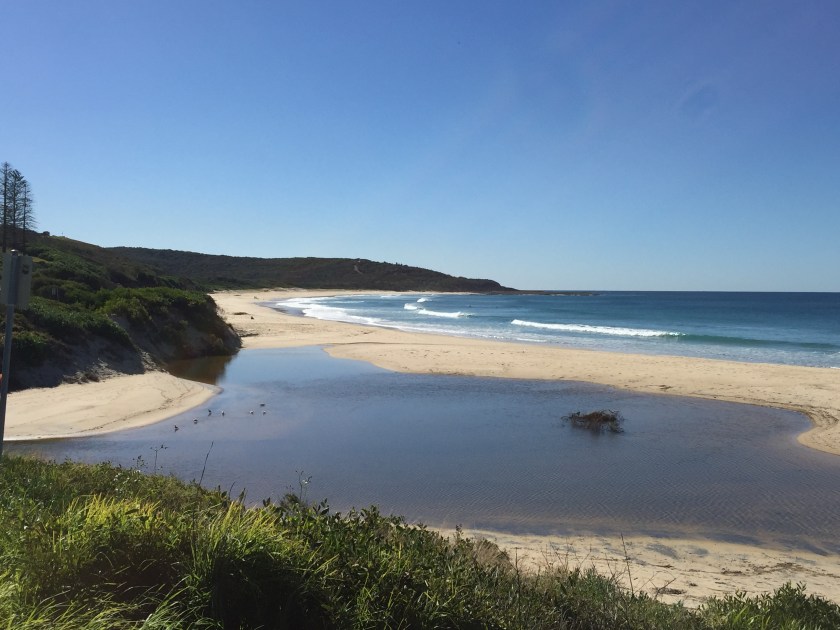
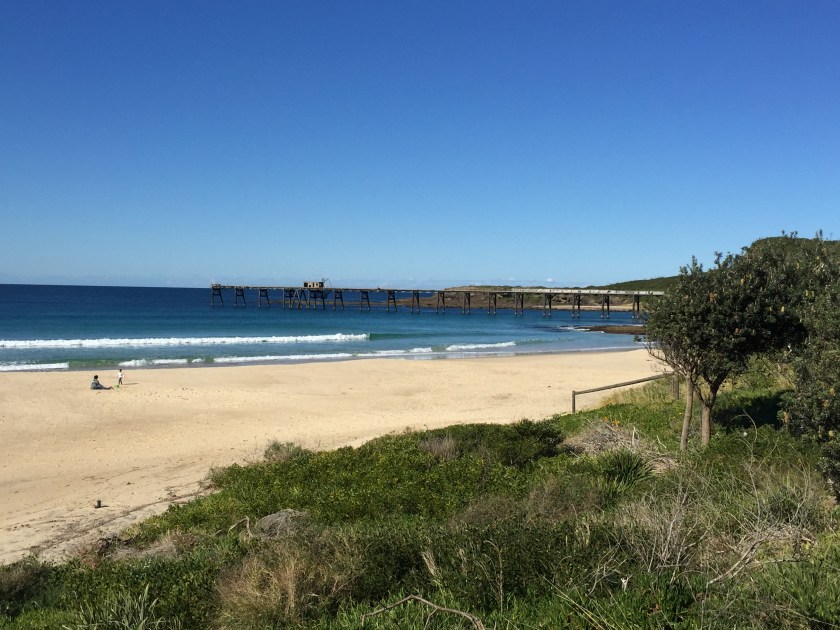
I had heard about Catherine Hill Bay some time ago – in relation to the residents resisting the development of the area.  The map showed that it was quite a long drive into the bay from the north.  Our GPS seemed to suggest it was closer than that.  When the GPS told us to turn right at the traffic lights, we realised that this was a new road into the village.  The road was obviously built by the developer and there is a huge subdivision taking place.  Only 2 or 3 homes appear to be being built at this stage but the roads, street lighting and some landscaping is all in.  The development spreads over several hills and look either out to sea or down to some untouched beaches.   We took a turn to the north and came upon the original hamlet.  The Catho Pub was at the top of the hill and down the road were small workers’ cottages, mostly the same in size and design, from some older era.  The road wound down to the beach – a glorious sweep of beach.  You can imagine how isolated and pristine this has been and how in the near future it will be a bustling town.

IMG_1105

IMG_1104

Catherine Hill Bay

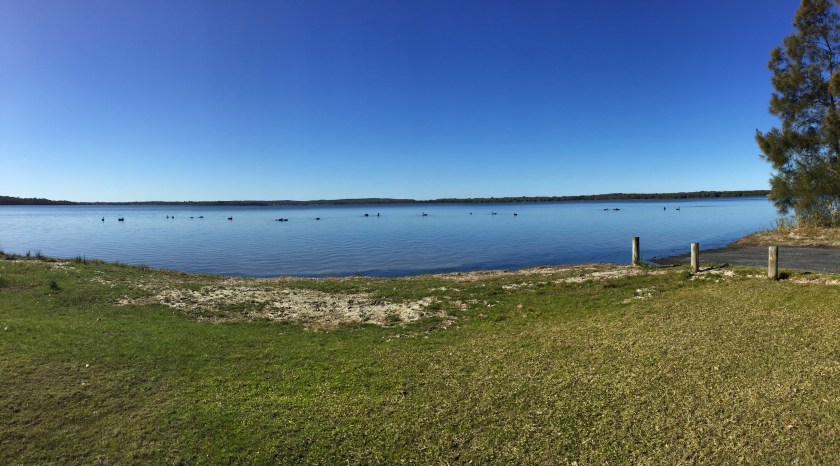
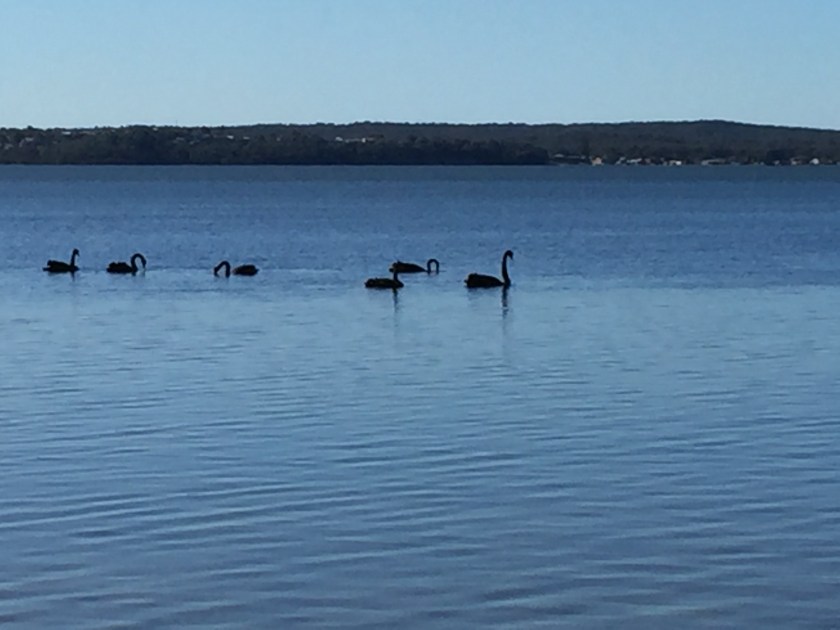
Lunch called and we stopped at Budgewoi.  We bought wraps and took them to Lake Munmorah.  We found it by accident, down a dirt laneway that opened up to a reserve around the lake.  We had the area to ourselves, apart from the hungry magpies who sat on the table watching each mouthful.  The lake was home to more than 30 black swans, all just lunching on the lake.  A pretty place to  find.

IMG_1107

IMG_1110

Lunch with the black swans at Budgewoi

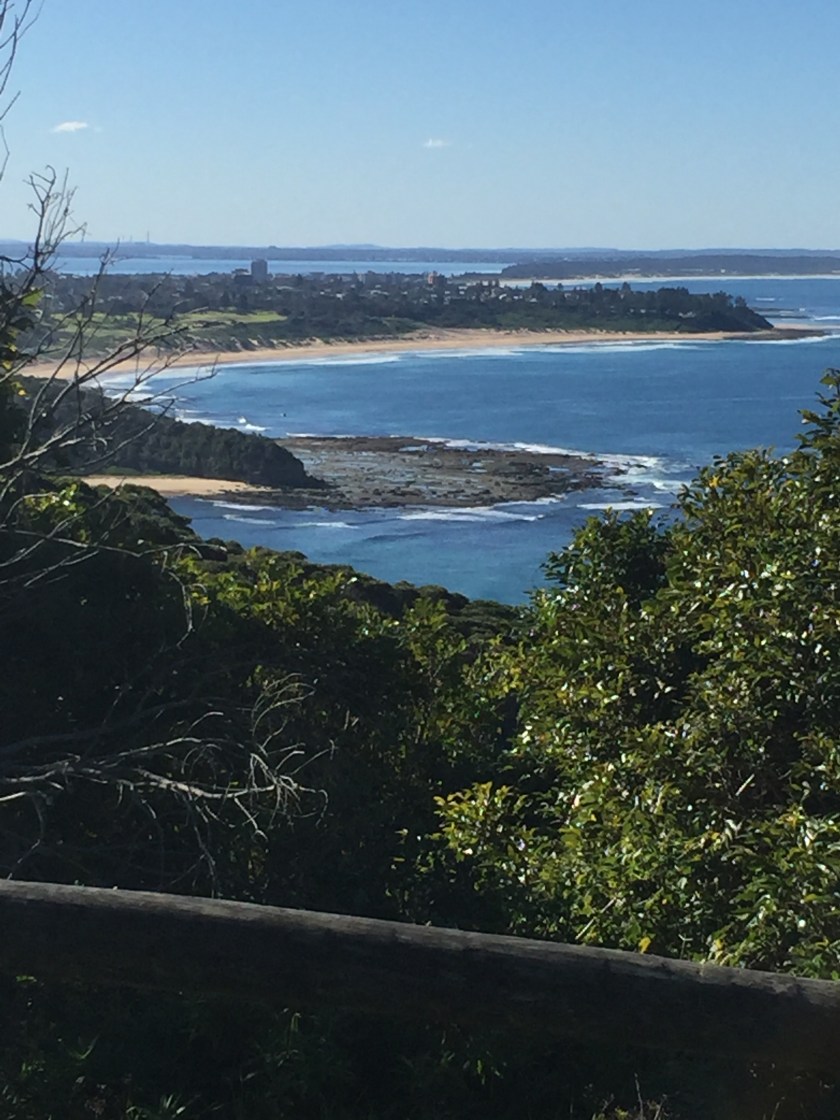
It was then time to check the beaches to the south. We found Crackneck Lookout at Bateau Bay – another great whale watching spot and plenty were doing that.  The lookout gave views to the north, right up the coast past The Entrance.  There was no wind but signs indicated that it was quite a hang gliding site.

IMG_1113

We travelled up to Toowoon Bay, past Shelley Beach.  Toowoon Bay is a lovely protected scoop of bay, and home to Kims Beach Retreat.  We have stayed here twice, more than 20 years ago.  It did look cold in the afternoon sun and perhaps not as we remembered it.

It was time to stop and have some reading time in our unit, before a walk at sunset along the waterfront.  We set off from opposite our unit and walked under the bridge and to the west.  It was a lovely time in the late afternoon.  The birds were flying in, people were fishing, children were still playing in the park.  The area reminded us very much of Forster.  Signage explained how the 3 lakes – Munmorah, Budgewoi and Tuggerah – all flow into the ocean through The Entrance.  Something it did say was that the water only changed 1% with the tide.  This was meant to make people aware of pollution and the impact on the lakes.  To us it seemed to warn you of the quality of the water.

Tuesday – another day and we had to come home, but it was a great example of how you can find so much enjoyment without travelling far. or spending a lot of money.

WOMBATS

It is a whole different thing to go to dinner in the country.  We were having dinner at a restaurant in Kangaroo Valley for my sister’s birthday.  They live on Woodhill Mountain, a 25 minute drive away.  The 4 of us got into their car as they thought it better that they drive the road – a quiet country road and it was dark at 6.30pm.  They warned us that they had to be careful as wombats were around on this road.  Wombats!!  We stopped 7 times on the way to Kangaroo Valley to allow these big boulder like animals cross the road.  Some just stood on the road, reluctant to move either cross the road or retreat to where they had come from. If we had collided with one of them, the car would have come off worse for wear.  After an enjoyable dinner in the restaurant, we stepped out into the 2 degree night for the trip home.  They were still out on the road, ambling around.  This time we stopped 4 times, but did make it home without mishap.
So different to going out to dinner in the suburbs!!

GULGONG

THE GLASS HOUSE

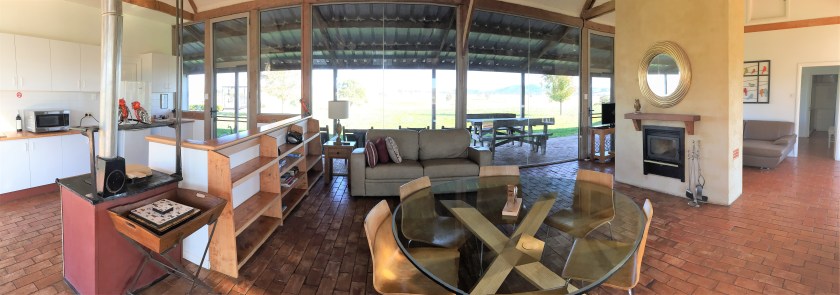
We travelled down from Lightning Ridge to Gulgong for our last night.  We booked a house called the Glass House.  Well it certainly had plenty of glass. It was set down a long tree lined drive and had separate studio units on either end of it.  This would be good if you had 2 couples staying with you.  The walls everywhere were glass, with just a curtain to pull around the bath and bedroom walls.  It was winter so we enjoyed the double sided log fire that warmed the house along with the air conditioning.


IMG_0974

LIGHTNING RIDGE

I was surprised how big Lightnng Ridge is and that it is all above ground, unlike White Cliffs and Coober Pedy. I think we were lucky with our choice of motel – it is comfortable and quite modern, unlike the other 2 that were close by. It is owned by the Bowling Club, which is over the road, so guess where we went for dinner. Dinner was from 6pm and we arrived shortly after to find a long queue at the bistro and only a couple of tables free. It was so busy. It became evident that people were also getting the meals as take away. I guess that is because once again there were not too many alternatives. It was certainly a step above our dinner at Injune. It is a big club.
Monday we decided to explore Lightning Ridge. They have a unique method of seeing things – they have 4 coloured car door trails. You go to the start of a trail and follow the coloured car doors. It doesnt take long to see why they use car doors. Everywhere there is dead machinery, trucks, cars etc, so no shortage of doors. There is surprisingly quite a large area with bitumen streets and houses, back from the main street. However, after that it is dirt tracks and roads, in around the diggings. It is all still very active so you have to stay on the designated trails, there are too many mine shafts all over the place.


We did each of the 4 trails. On one we went to Amigo’s Castle, a private home single handedly built of ironstone. Amigo started building in 1981. His scaffolding consisted of 44 gallon drums, with planks arranged one above the other. As he had collected all the rocks from around the area, the Greenies brought action. Then the locals supported him and all sorts of issues and court cases ensued. In the end he was going to bulldoze the castle if he was not allowed to stay. It now has a Heritage listing (such a young building) but he has wiped his hands of it and is now living in a besser brick building behind it, but still mining. When we looked over the castle, there was a wishing well he’d made and you could hear him working below.


On another trail we stopped at Chambers of the Black Hand. We descended over 70 stairs into the top of the mine which was then a series of tunnels that had been mined over time. The miner has, over time been carving over 700 reliefs on the walls. He does it with a butter knife and fork. He was actually there, working on a possum. He said he saw an empty space that needed something so this morning put a possum in. The passageways were filled with every type of subject matter. He had Egyptian mummies, freezes, the Last Supper, Chinese warriors, animals of all sorts, Super Heroes, heads of Prime Ministers of Aust and then of famous people. He had put bars across the one of Rolf Harris. The passageways ran off in all directions and in circles. Amazing. He was chatting as he sculpted, saying he had quit mining 6 months ago but would still buy a piece of opal if he thought he could make money. He said he never made it big when he was mining. He’s probably doing well with this underground gallery at $35/person. There was a theatre and also another level below where you could go on a mine tour.


We went back to the Bowling Club for a sandwich for lunch – where else did you go? They told us that there had been a blackout in Lightning Ridge and the surrounding areas for some hours and it would probably not be back for another hour, but it was ok they had their own generator. We heard later that a kookaburra had flown into a substation.
After lunch it was another couple of trails. One took us to a ridge that looked out over the black soil plains. We went to Nettleton’s First Shaft Lookout where there was a Stone Labyrinth (a maze made with rocks) which of course we tried. Nearby was a Beer Can House (only in Aust) that was in some disrepair but quite amusing. We also saw a corrugated iron church purpose built for the film “Goddess of 1967”, and Bevan’s Cactus Nursery with 2300 species of cactus. We didn’t pay to go inside this.


There is an artesian bore bath that we checked out this morning. It was really a round pool with 40 degree water in it. I was not that keen to go in. You couldn’t see the water changing and there were quite a few sitting in it. I’ll stick to my beautiful water.
Dinner was back at the Bowling Club – where else!  This time it was not as busy as the night before, but they were still doing really well.

COUNTRY QUEENSLAND

AGNES WATER TO ROLLESTON

We left Agnes Water and travelled the 62km to the highway and then north almost to Gladstone 1 1/2hrs before turning west and to Biloela. We stopped at the Lions Park to eat our breakfast and what a great park. Lots of tables and bbqs, even a stainless steel washing up space, great kids equipment with a bike track all around the park and excellent toilets.
It was out along the Dawson Highway and next was a town we got a laugh from on our trip 3 years ago out to AW – the town of Banana. It’s named after a bull, famous in the town, named Banana as he was yellow. He died beside the creek and as they say, a town grew up beside the creek and they named it Banana. We continued west, whereas previously we had come up to Banana from the south and our memorable overnight stay at Taroom (for all the worst reasons).


It was 180km further west to Rolleston and we were surprised at the size of the town. I think we had been expecting it to be bigger, not sure why. There were a few houses, some shop/buildings that were shut and looked like they may never be open and a park. We were going to stop there and boil our billy. When we got out of the car, it was a lovely park, with several seats with cushions and a pot of flowers on a table. There was a historical old Australian bark hut and under its roof, an old fashioned coffee van. We thought we should patronise the locals and discovered it was manned by a local woman and her mum, both volunteers, raising money for the local community. They said it is manned everyday and is certainly not taking business away from anything in the town as there is nowhere there to get a coffee. We also sampled their home made cake, sitting on one of the seats in the park. They said it is manned everyday.


INJUNE

At Rolleston, we turned south, to come down the Carnarvon Highway, which pretty much brings us down a straight line into NSW at Lightning Ridge. We had booked accommodation at Injune and arrived there around 2.30, approximately 700kms from Agnes Water but easy travelling because the roads were so straight and flat and there was so little traffic. It seemed funny to be staying at Injune, in May!
Injune was another small town. There were 3 motels, the pub, a caravan park, a small Spar supermarket, a few shops, cafe and visitor information centre. It was Saturday afternoon and everything was shut except the visitor information centre and the pub. Our motel room at the Injune Haven Motel was really quite good, although more expensive than our lovely 2 bed unit at Agnes Water. We set off to explore – more a walk along the main road/street. Injune began in 1920 when it was  established as a camp at the end of the railway line. The line was built to support the Land Soldier settlement blocks after WW1. Cattle and timber (harvesting of natural cyprus pine) are the main industries today. It is also the gateway to Carnarvon Gorge, the turn off being between Injune and Rolleston. Coal seam gas has recently benefitted the town. The pub was our only option for dinner but that was ok. We were staying opposite so it wasn’t a long walk. It was bright lights, a pool table, tv screen and bar to order, all in an old outback decor. The corned beef was off so we ordered rissoles and veg and sausages and veg. Quite ok for where we were. There were very few others there and it was Sat night. 2 couples were drinking outside with a few children and a couple came in after us and ordered a meal. One of the men from outside came in and the first thing I was aware of was the clinking of the spurs on his boots. He went over and started lighting one of the open fires in the room and called out a few friendly words to us. Then he brought his 6mth old son (John Guy Walker, known as John John as he was 3rd generation John) to see the fire and then pulled up a seat and began talking to us. He was a cowboy, did rodeos, quarter horse breaking in, horse whispering and Mon-Fri worked in the sawmill. He was 40, a twin and his twin was the other half of the other couple with the kids outside. He was well on the way to drunk but telling us of his life. A real character, all the while nursing John John, a really cute and alert baby. It was sad, however, as we walked out, to see the age of his mother, she was so young, probably still a teenager. You wonder what life is ahead for these children. They are living in such a small and remote town, and the facilities so few.
It was an early night and as we were the only people in the motel, quiet.


ROMA

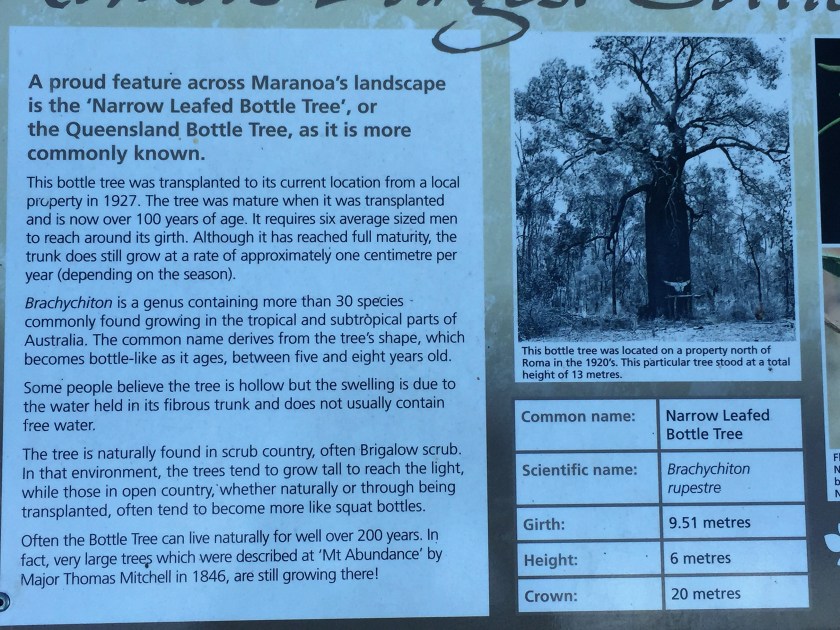
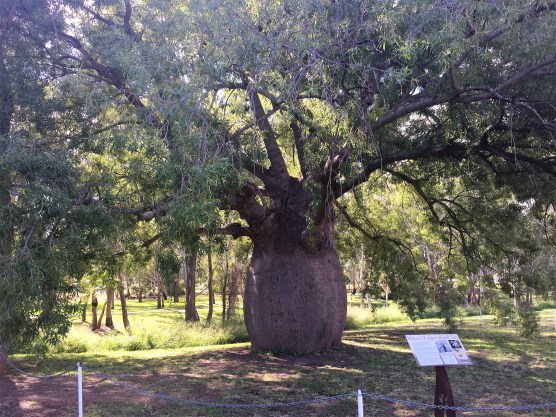
Sunday we left Injune at 8 and drove 90km to Roma. This was quite a large town and we stopped for morning tea at a pub that had been totally modernised – popular and good. We tried to book accommodation for Lightning Ridge and found it wasn’t so easy getting 2 nights. After noone around in Injune we were surprised at how busy Lightning Ridge appeared to be. Anyway we found a motel. Roma looked a prosperous town, due to the oil and gas mining. They had some lovely old boab trees, including their biggest with a girth of 9.51m and 6m tall. There was an Avenue of Heroes – 140 boab trees lining one main and 2 short streets, each commemorating fallen soldiers from the Roma district in WW1. The main street also had well restored pubs and wide streets.

IMG_0767IMG_0766


ST GEORGE

From Roma it was nearly 2 hours to St George. We were surprised how small this town was. Cotton growing is one of its main industries, using channel irrigation to supply the water from the Balonne River. The land is so flat and the cultivated areas immense. It was named St George by the explorer Sir Major Thomas Mitchell who crossed the Balonne River on Saint George’s Day – 23/4/1846.

DIRRANBANDI

We bought lunch at one of the few places open, and the salad rolls were made very much on country time from a very ordinary looking place, but they tasted fine when we ate them, 89 kms later at Dirranbandi (meaning frog’s croaking). Another small quiet town with not much but a small well kept park. This town is very close to Cubby Station, the largest cotton farm in the Southern Hemisphere.


HEBEL

Next town, was Hebel, just before the NSW border. This really did only have a pub and General Store. The pub was so outback – corrugated iron, wooden walls, everything rusty, broken or dangling. Utes were parked out front and it was very busy with the locals (all middle aged and male, with their big hats and boots and no women) drinking and talking. To the side was the “bistro” another rough corrugated iron structure with 2 windows, presumably to be served through. It is said that the pub opened in 1894 as a Cobb and Co changing station and was originally called the Commercial Hotel.


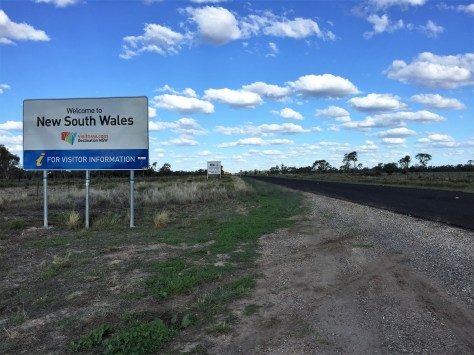
When crossing the border, there were so many signs for those entering Qld of what they could not take into the state. There were no signs coming into NSW???

IMG_0791

It was only 63km and then we turned off to Lightning Ridge.


ROAD TO LIGHTNING RIDGE

We travelled 7 hours yesterday and 6 today and the whole way, since Biloela, the roads have had signs that they flood and indicators showing the depth. The roads have been flat, except for a couple of times when we rose to 400+m – once between Banana and Rolleston and today on the Great Dividing Range. Each was just an incline and not really noticeable. What it does show is how flat Qld is and how when there is a lot of rain in the north, floodwater spreads over such vast distances.
There has been a lot of road kill. Mostly kangaroos, but today a goat. We stopped or slowed for kangaroos twice today. We also stopped and then drove slowly because cows were grazing beside the road and were wandering from side to side of the road. They were being moved by men on quad bikes and their trusty dogs. It seemed they were feeding on the grass beside the road as the land on the other side of the fences had no feed. It was quite dry and dusty.


AGNES WATER

THE TOWN

The town of Agnes Water is quite small, the shopping area is really just a curve of shops, comprising the basic needs – newsagent, chemist, bakery, couple of takeaway shops, liquor shop, now a butcher, clothing shop, camping store, post office, coffee shop, a small supermarket and now a bigger Foodland. Since we were here the Foodland has been developed and the butcher has opened. My favourite is Beach Buddies, a swimming costume shop where the lady will make the costume to fit you, in your choice of fabric. A strange business in such an out of the way place. Apart from this there are some other businesses out of town that we really enjoy using. Probably 6km before town is the industrial area. Down a road are probably 4 factories and in one is a seafood outlet. Diane and her husband retail fresh seafood, some they have frozen and the variety is very good. We were there on Sat as she was just getting the freshly cooked prawns out. A couple of people were waiting as they were not quite cooked yet. Another place, about 4km out of town and down a road a km, is Ron’s fresh vegetables. He grows most vegetables and when I asked for a lettuce, he went and pulled it out of the garden. He will do the same with spinach, beetroot, kale etc. The strange thing we have noticed is how the locals don’t seem to necessarily support each other. When we booked into our accommodation, we asked the receptionist if Ron and his vegetable stall was still around. She said, oh no, he’s not there anymore. We were disappointed at this news as we had been looking forward to buying from him. The friendly lady at the visitors centre also confirmed this news. The following day we went for a drive to where he was and he was well and truly around. We went to the butcher for some meat and chatted with the lady serving us, who turned out to be the wife of the butcher and owner. She said they had opened in Nov, after a lot of research and planning. They were very disappointed by the local patronage they were receiving and were finding it tough to make a go of the business. We, of course wondered where the locals would buy their meat, the only other source is packaged meat at Foodland. When we went to the Festival at 1770, chatting with someone from the caravan park there, they said the park owner was not friendly with the other park owners. It is sad that this happens in such a lovely place.
IMG_0739IMG_0742IMG_0738

GETAWAY AT 1770

A km out of town is a lovely nursery/coffee shop with some cabins for accommodation. They have created a beautiful bromeliad garden that you walk through before coming to a pavillion where you sit, partially over a lake with lily ponds and a water feature and can eat and have coffee. It is open to the sights and sounds, although they can pull down a see through screen if it is windy. It is such a tranquil place and the variety of plants, their colours and shapes, creating a wonderful garden. The coffee is also good.

1770

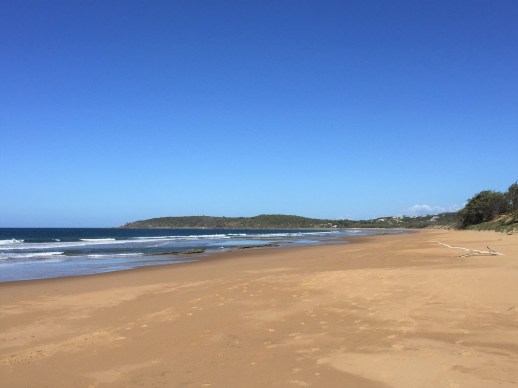
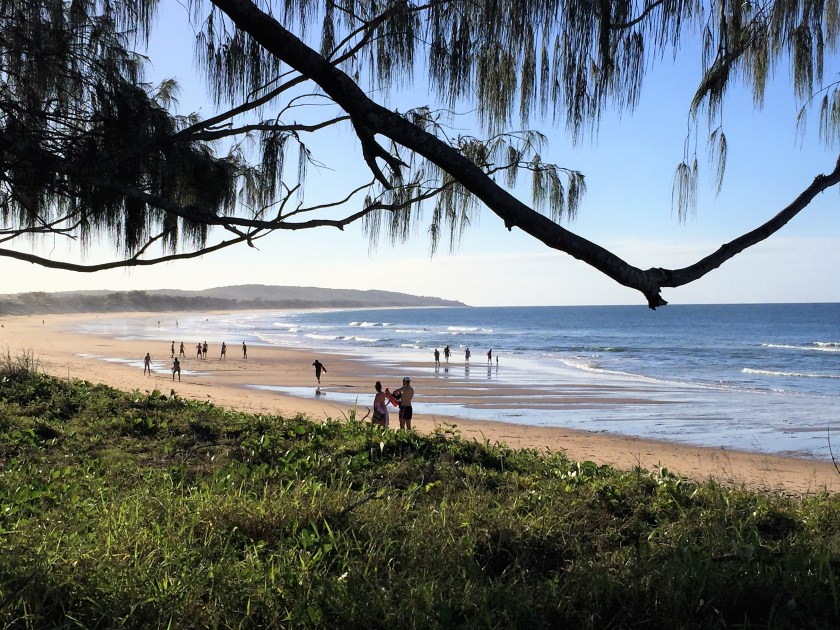
This town is 8km north of Agnes Water, and the end of the road. It appears that it was only called 1770 in 1970, prior to this it was called Round Hill. When Captain Cook landed here, his second landfall after Botany Bay, on 24 May 1770, one of his landing party shot a bustard, and along with a couple of cockatoos, it provided their first fresh meat for some time. Hence the name he gave the bay – Bustard Bay. There is a high headland that he rounded to get into 1770 and he named this Round Hill, as he had to sail around it. This is now a lookout, site of some lovely homes with spectacular views and what seems to be a great surf break for surfers, after they have clambered down to the water. A sandbar out from shore provides a lovely sheltered lagoon area for some boats and people to paddle board, kayak, swim. At high tide the water laps the sandy shore and to the south, mangroves. The only commercial thing here is a pub, looking out to the sandbar – fabulous position, but it is old and probably in need of some refurbishment, but I get the idea the locals like it as it is. Some old fishing cottages are perched above the road, also enjoying wonderful views, along with some newer places. They have developed the waterfront area into a lovely park, with plenty of shade, tables, bbqs and paths. A very tranquil area.

It seemed amusing that the Saturday before we left home we had had a picnic with the girls and their families at Kurnell for Mothers Day. We had driven out along Captain Cook Drive, to Kurnell, where Captain Cook first came ashore at Botany Bay. Then on Friday we were driving along Captain Cook Drive to 1770, to celebrate the Festival of 1770 – marking the 2nd landfall that Captain Cook made on 24 May 1770.  I have even likened the travelling from Agnes Water to 1770 to being very similar to driving from Cronulla High School to Kurnell. The road with little development along it, although that is changing at Cronulla, and about the same distance. So many similarities.

LOSING THINGS

There have been quite a few instances of things going missing. Luckily I think everything is presently accounted for but – sunglasses, reading glasses, board shorts, hat, chamois…. have all gone AWOL. Interestingly none of the items are mine.

OUR ACCOMMODATION

We were very lucky to find the accommodation we did.  Unfortunately for Agnes Water, it was a very quiet time of the year and so the various accommodation places were offering good discounts.  Pavilions on 1770 was great.  It had originally been built by Grant Kenny and Lisa Curry around 2006.  When we were at Agnes Water 3 years earlier I don’t think it was all complete so it has been built in stages.  We were lucky enough to be on the top floor looking out across the 25m pool and had glimpses of the ocean, over the trees on the dunes.  The rooms were huge and it was well appointed.  Paul even had a desk in the living area for his “office”.  Another block across the road had some smaller heated pools and was frequented by the children.

OTHER ACCOMMODATION

We went for a walk the other night and walked through 2 of the resorts that are on the road in to our place. They are set off the road from Agnes Water but before you drive as far as us. They are not on the water. The first, Edges on Beaches @ 1770, consists of town houses built around a large central area. In this central area are 4 pools, attractively shaped and landscaped and a bbq area. Many of the townhouses open up to this setting. One pool is heated. There were possibly 40-50 and so few were occupied, maybe 5 or 6. Opposite is a very imposing 2 storey building that is not very attractive from outside but that is because their rooms also open to a central area. This has more pools and an outdoor/indoor restaurant. The most expensive rooms have a ladder from a little grassed area, into one of the pools. ($650/n!) It too was very quiet – noone around. There were a few people eating in the restaurant. Its website seemed to talk about conferences and functions. Around us there are large parcels of land already subdivided for homes, but it doesn’t seem to have changed much since our visit 3 years ago. There are a few homes, then empty blocks.

SURF SCHOOL

Each day the local surf school takes place. The surf shop seems to be able to get 20 young people each day, for a lesson. They all arrive carrying their blue boards, dump them on the sand and have some theory on the grass. Then it’s on the boards on the sand and instructions followed by a conga line carrying the blue boards and wearing blue rash shirts, into the surf at the southern end, along the rocky headland. The waves here come in in a nice long pattern and it is not deep. They take turns lining up and having the instructor call out when to go on the wave and surprisingly many are able to stand, for varying lengths of time. Naturally there is the resident photographer to capture their progress and of course sell to them later. We noticed one day a fellow come to shore on his standup paddle board and his fox terrier dog go racing into the water to greet him. Next he was on the board as well and his owner was paddling out with him sitting at the rear of the board. They went right out. We watched them catch 2 waves and both fall off before he caught a couple of good rides. Once on the wave, the dog moved to the front of the board. He loved it and it was so nice to see how happy and excited he was.
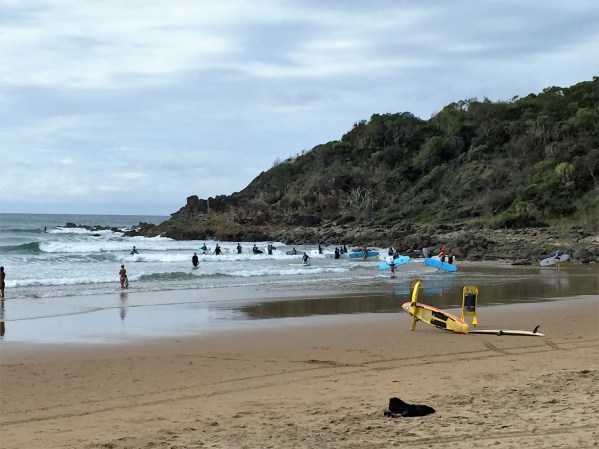
IMG_0643

FESTIVAL OF 1770

We were lucky to arrive a day before the celebration of Captain Cook coming ashore at 1770 on 24 May 1770 – his landfall after coming ashore at Botany Bay.  It was not lost on us that 6 days earlier, we had driven out along Captain Cook Drive to Kurnell for a family picnic – in the park with the monument commemorating this event.  Here at Agnes Water, we were driving out along Captain Cook Drive to 1770.  It made me think that the distance from Cronulla (Wanda Beach) to Kurnell, is very similar to the distance from Agnes Water to 1770.  So too is the lack of development between the 2 places (although that is changing at Cronulla with the Greenhills development, and others).

Back to the celebrations.  They were doing a re-enactment of the landing, but before then, one of the locals was going to try and break the Guinness World record by getting 26 dogs on a standup paddle board.  We decided to go and watch, along with the locals and people staying at the caravan park further along the beach.  A motley collection of dogs – big and small, were already being placed on the board.  At a certain point, the fellow asked how many were on the board.  Just as someone called out 22, one of the dogs jumped off and swam to shore.  He was followed by another.  Owners brought more dogs to the board and eventually he decided he had the 26 and started paddling.  He had not gone far when one dog jumped off and swam to shore, followed by a few more.  Two on the board started snarling and snapping at each other ….. It was a hoot. He brought the board back to shore and then played around with the dogs.  One dog was swimming in all directions, following a drone.  Everyone was laughing and taking photos – it was a good vibe.

This was followed by the re-enactment. The locals had all volunteered for roles and were dressed in period dress.  Channel 7 and Queensland Weekend were there filming it.  This too was fun.  When Captain Cook and his crew came ashore, they shot a bustard and then some cockatoos.  They really enjoyed their meal from the bustard and named the bay – Bustard Bay.   One of the locals was dressed as the bustard and she looked so funny.  We were also told that 1770 was called Round Hill by Captain Cook – because he came round the hill to enter the bay.  It was only changed to 1770 in 1970, although someone told us it had happened some years earlier.

There were further celebrations on the Saturday and Sunday – mostly bands and amusement rides, which for a small community, was quite something.  The weather forecast had been for heavy rain over the weekend, but they were very lucky and it was lovely blue skies both days.

Re-enactment with bustard being shot!


HAVING FUN AT 1770

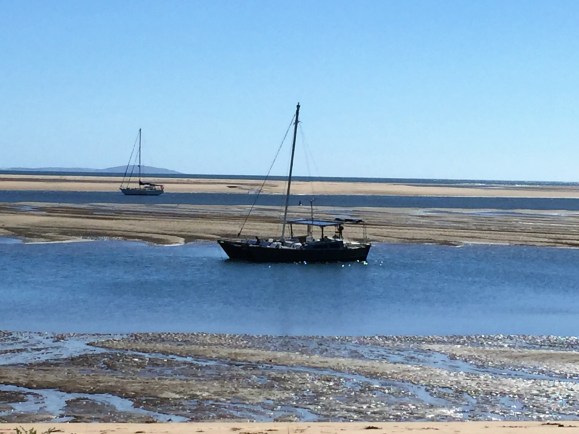
One day we went a hired standup paddle boards at 1770.  The fellow who we hired them from was actually the same man who put the dogs on the board.  There were no other people around so we had the bay to ourselves.  He was having a tiring day, sitting under a tree playing chess with one of the locals.  We had the boards for an hour and paddled around in lovely still water.  It was low tide and the sandbars were appearing, making it very picturesque.


Another day we booked a 2 hour kayak tour up the river and through the mangroves.  We were the only 2 and so had the guide to ourselves.  We started at 8am to fit in with the tide, but it was so tranquil, particularly when we drifted through a narrow channel in amongst the mangroves.  Janina was so very informative and explained and showed us more than 12 different species of mangrove.
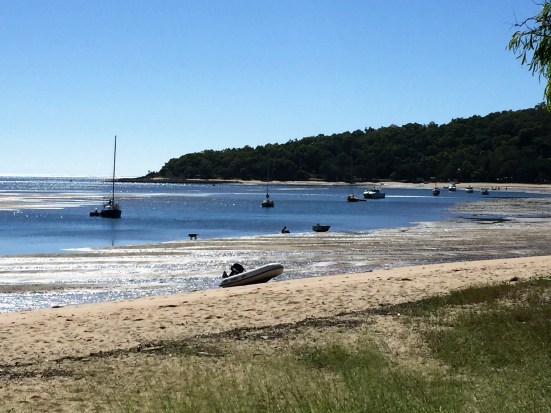
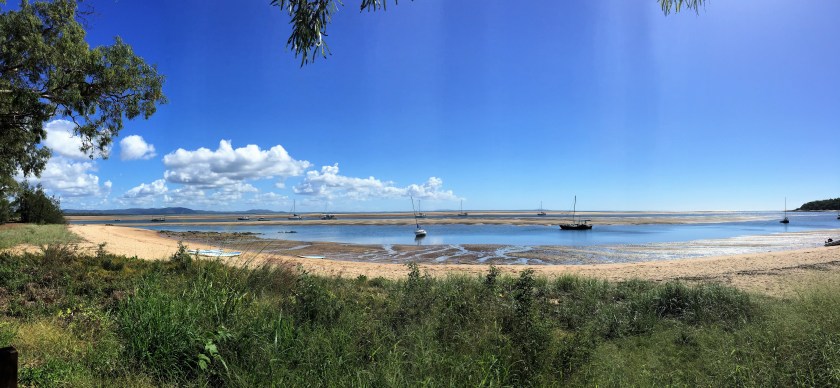


IMG_0695IMG_0693IMG_0697